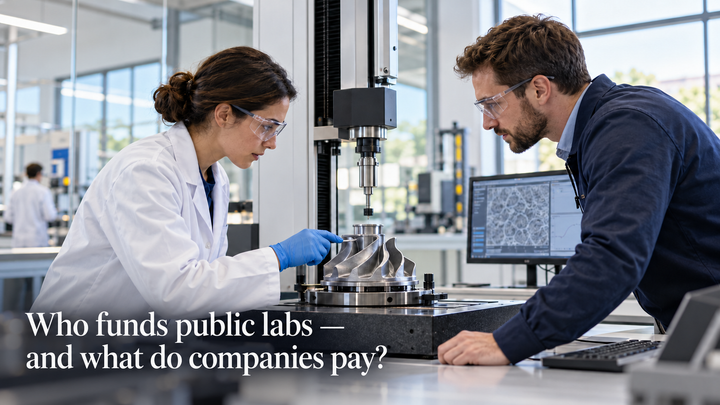
The Money Behind Public Labs Public labs are not free infrastructure. The route a company uses determines which costs it pays, when it pays them, and what it does not need to own.
The Technology Clock A long technology journey does not always need more capital. Sometimes the first step is to reduce how much cash is needed.
Who Pays, and Who Decides? Who pays for the next stage of technology — and who decides where the money goes? This opening piece maps the institutions, funds and decisions between public budgets and industrial use.
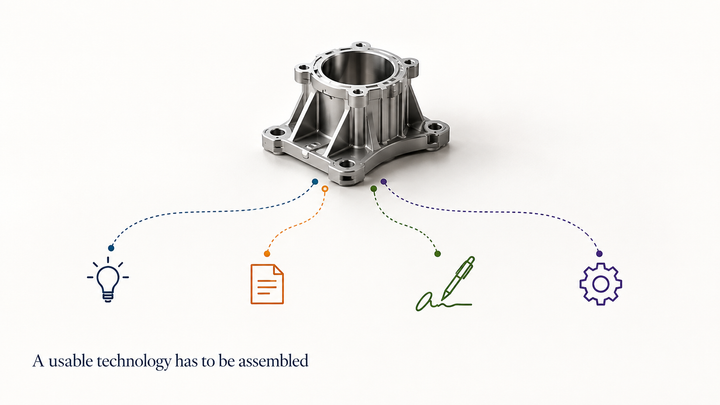
Who Moves Public Technology Into Use? A promising patent is only the starting point. The real question is whether the rights, know-how and implementation conditions make the technology usable.
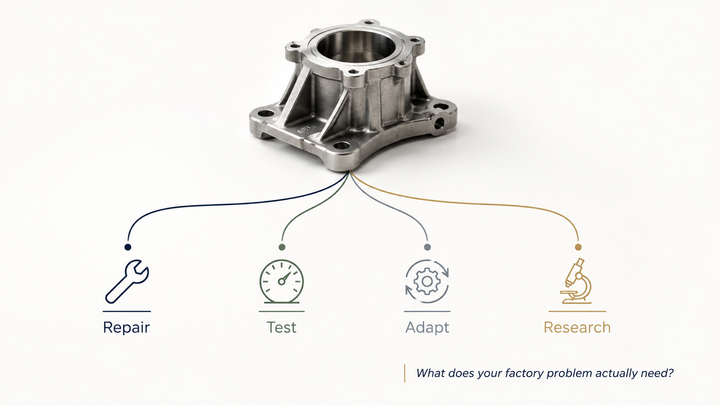
Why Does a European Factory Look to Korea? When does a factory problem become a research project — and when is Korea the right place to solve it?
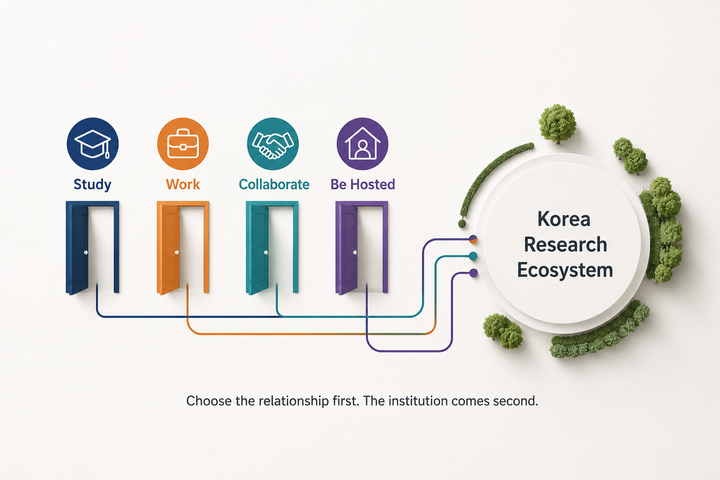
Four Ways to Enter Korea's Research Ecosystem A practical guide to four ways into Korea’s research ecosystem — study, work, collaborate or be hosted — with where to look, what to verify and when Korea may be worth the move.
After the MOU Three researchers answer the same six questions about what happens after an MOU — where cooperation begins, where it stops, and who must carry the next decision.
The System Navigator What makes a researcher stay in another system? Dr. Jung Han Choi reflects on research continuity, photonics, mobility and the culture that makes long-term careers possible.
Who Chooses the System? What should a researcher judge before crossing into another research system — and where does information stop and experience begin?
The Five Judges Who decides whether a technology moves from research to PoC, joint R&D and market — and where does the handover still break?
When Industry Needs a Public Institute Public institutes reduce technical risk. Companies decide what comes next.
The Scale-up Scientist Inside battery black-mass recycling, what deep-tech scale-up must prove before reaching production.
From Research to Industrial Proof How research evidence becomes pilot-ready when funding, ownership and responsibility align — and why even a signed contract does not end the burden.
The Infrastructure Few Companies Can Build Alone How shared research infrastructure turns laboratory results into evidence that partners across borders can compare, trust and use.