When Industry Needs a Public Institute
Public institutes reduce technical risk. Companies decide what comes next.

Where the Limits of What a Company Can Build Alone Begin
A question that begins with one defective part no one can explain
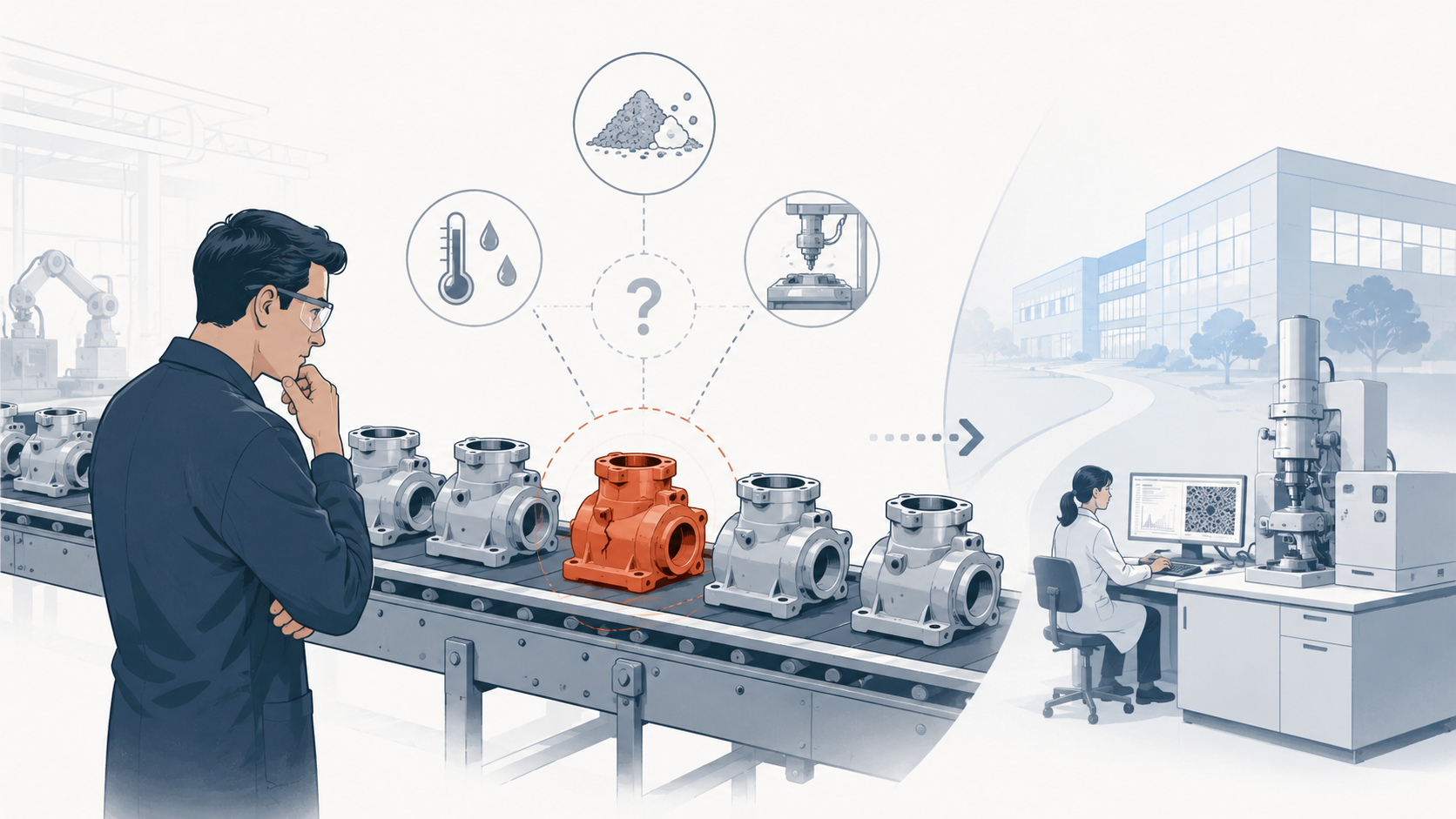
This is the final passage in the flow: Evidence → Responsibility → Scale-up → Industrial Adoption. The camera crosses the bridge — to the side that decides adoption.
One Defective Part
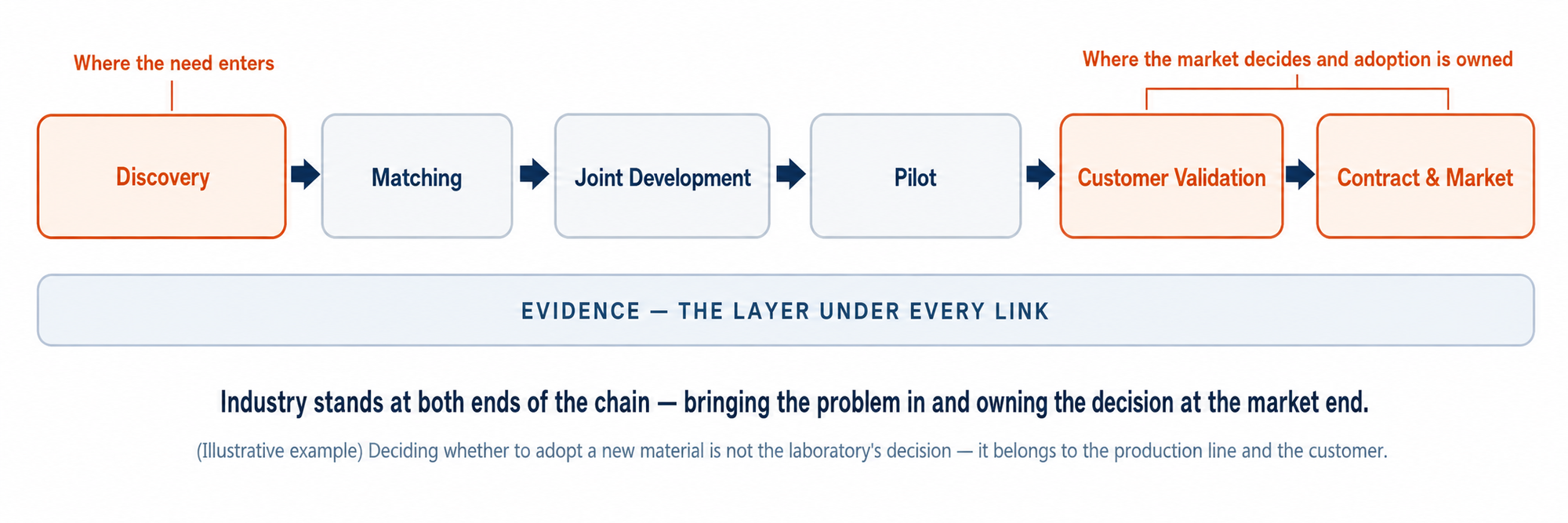
A defective part comes off the production line. The company's quality team checks the process and switches raw materials. The defect keeps returning. Whether the cause lies in the material, in the process conditions, or in a subtle change in the equipment — the company's own instruments cannot finally tell.
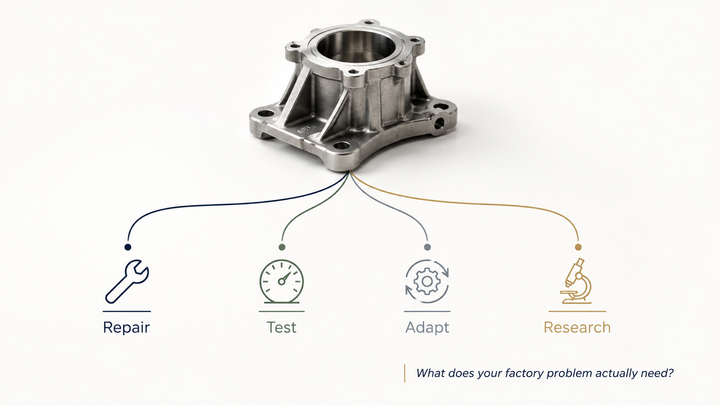
This is the moment when many companies first turn to a public research institute. Not to develop a new technology, but to explain the problem they already have. The first need is not development. It is explanation.
Companies build their own measurement rooms, analysis facilities and test lines. But as the first article published today (The Infrastructure Few Companies Can Build Alone) showed, results produced inside one company must connect to external standards before supply chains, regulators and overseas partners can use them. Explaining a cause takes analytical equipment the company does not own, accumulated interpretive experience, and a common standard that makes the result trustworthy.
Companies do not need public institutes because they lack capability. They need them because the fixed costs are too large to carry alone, because common standards are required, and because some problems extend beyond what one firm can solve alone.
Five Thresholds
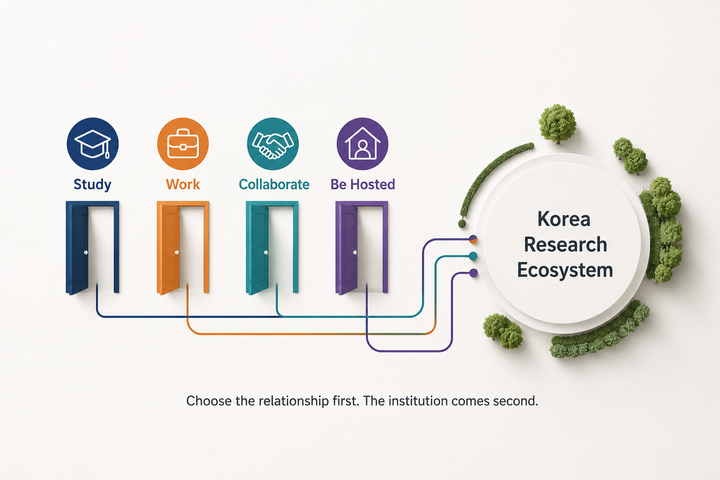
A company does not meet a public institute at a single point of contact. The door depends on the nature of the need. This table sorts a company's situation into five thresholds.
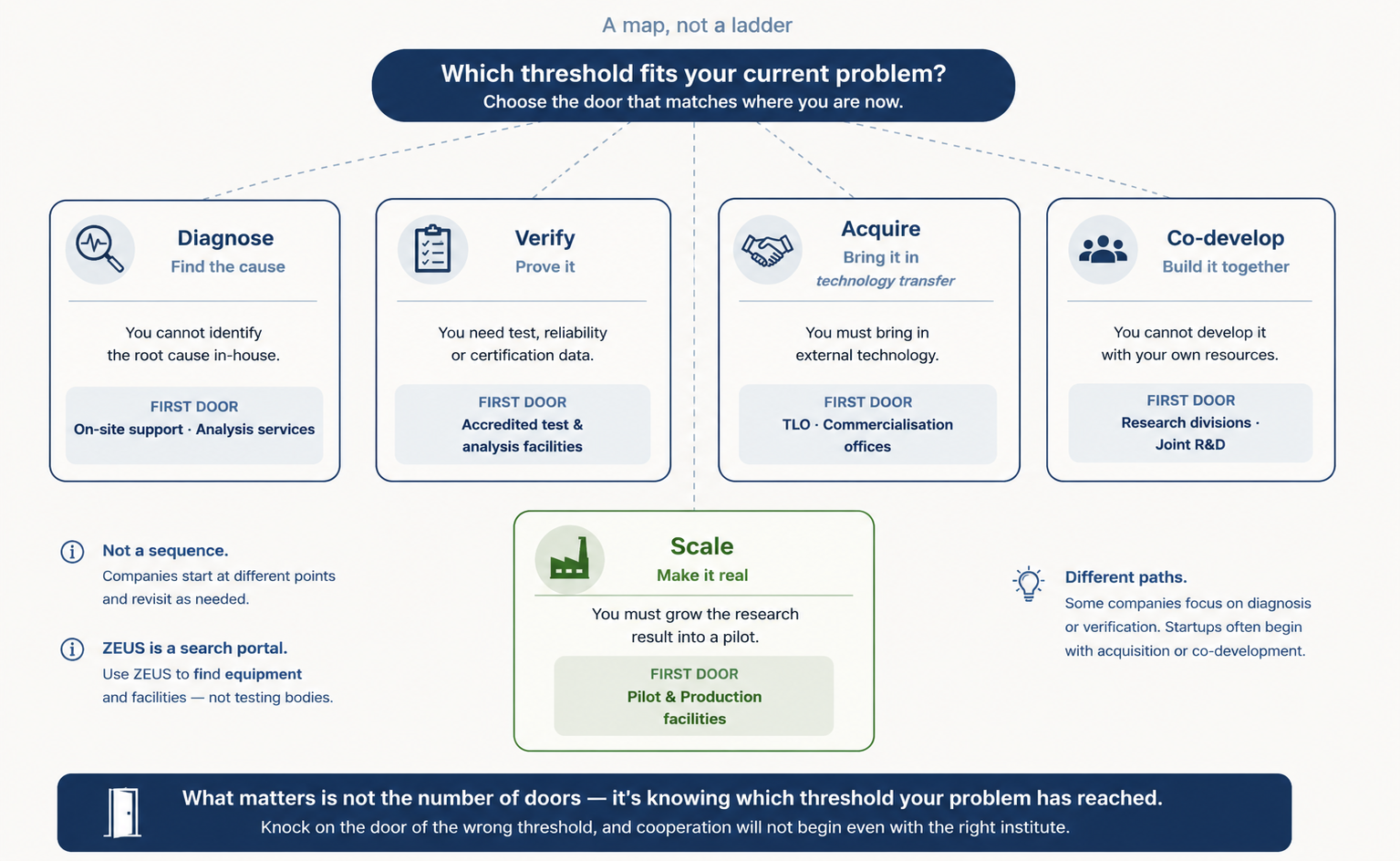
These thresholds are not a ladder. Some companies start at diagnosis; others already hold a technology and only need test facilities to verify it. Start-ups often begin at acquisition or co-development. It is not a staircase to climb in order, but a map for locating which threshold best describes your current problem.
Facilities for diagnosis and verification can be searched through ZEUS — ZEUS is a search portal for research equipment and facilities across Korea, not a testing body. The link to measurement standards (KRISS) that makes test results usable in decisions was covered in the first article published (The Infrastructure Few Companies Can Build Alone). Acquisition is handled by technology licensing offices (TLOs) and commercialisation units — the other name of this threshold is technology transfer — and at co-development and scale-up, the support windows mapped in From Research to Industrial Proof come into play.
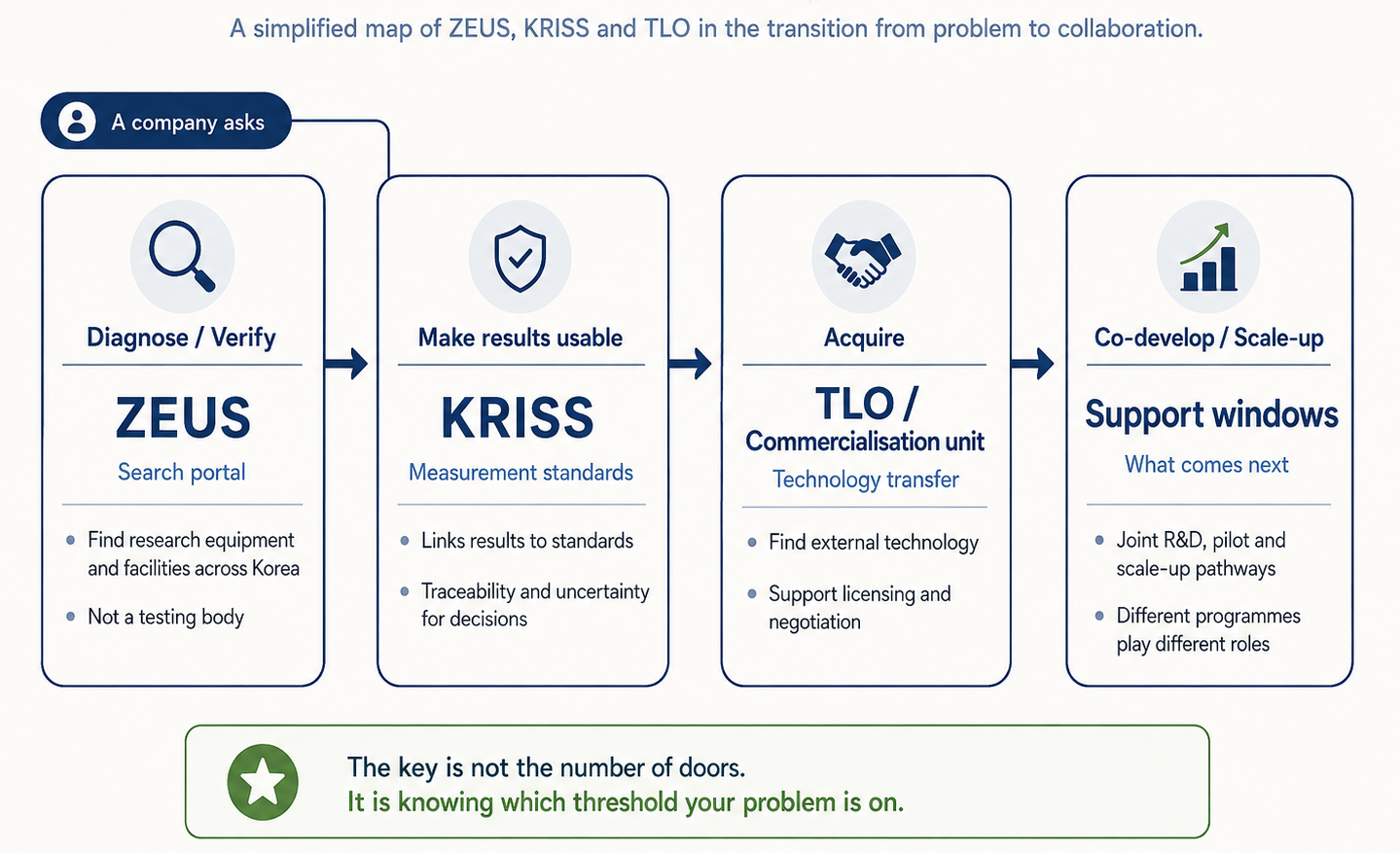
What matters is not the number of doors. It is knowing which threshold your problem is on. Knock on the door of the wrong threshold, and cooperation will not begin even with the right institute.
Two Cases, Two Models
There is more than one route by which a research result becomes a company's business. Two public cases show two different models.
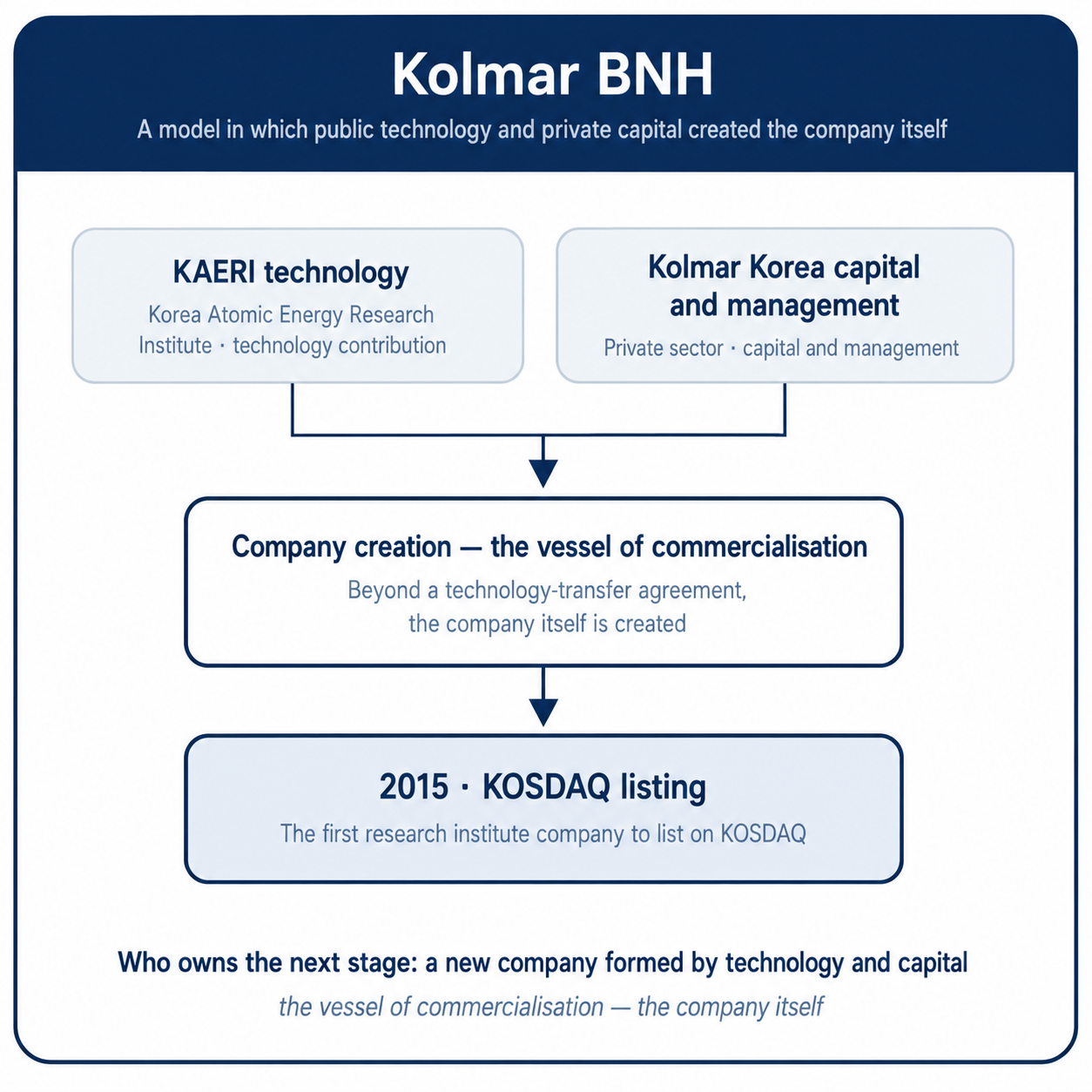
Kolmar BNH — public technology and private capital created the company itself (listed 2015). Kolmar BNH was founded by combining technology from the Korea Atomic Energy Research Institute (KAERI) with capital and management from Kolmar Korea; KAERI presents it as Korea's first research-institute company. The institute contributed the technology and the private side carried capital and management — going beyond a licensing contract to build the vessel of commercialisation, the company itself. In 2015 it became the first research-institute company to list on KOSDAQ.
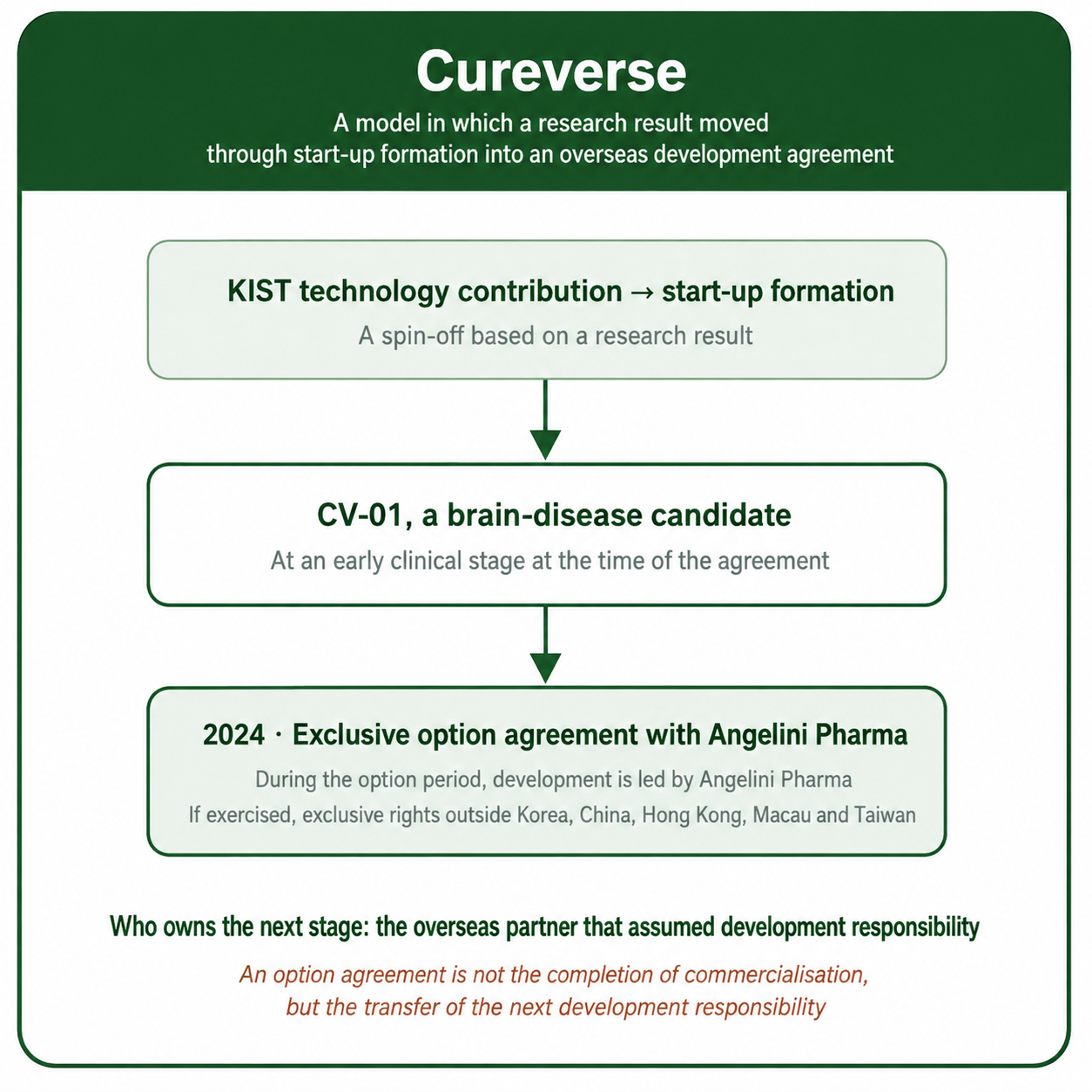
Cureverse — a research-based spin-off moved a drug candidate into an overseas development agreement (2024). Cureverse, a start-up founded on technology contributed by KIST, moved its brain-disease drug candidate CV-01 into an exclusive option agreement with the Italian pharmaceutical company Angelini Pharma in October 2024. During the option period Angelini Pharma leads development; on exercising the option it secures exclusive development and commercialisation rights outside Korea, China, Hong Kong, Macau and Taiwan.
The two cases differ in form — one created a company, the other moved a research result into an external development agreement. But both required an industrial owner beyond the research institute. What matters is not the history of the company, but who took ownership of the next step.
It must be said clearly that both are cases in which unusually many links of the chain were connected. Like the KIMM–KBR case in From Research to Industrial Proof, they show what becomes possible when the links connect — not that most technologies follow the same route. CV-01 was at an early clinical stage at the time of the agreement, and an option agreement is not commercialisation completed: it means the responsibility for the next stage of development has been transferred.
German Mirror
The financial door into a public institute is designed differently from country to country. In Korea, SME cooperation often begins through publicly funded programmes — government industrial-technology projects or the institutes' own SME support schemes. Germany's Fraunhofer operates contract research — companies commissioning an institute directly — as a major financial and cooperative route alongside public projects. Both models exist on both sides; what differs is the emphasis.
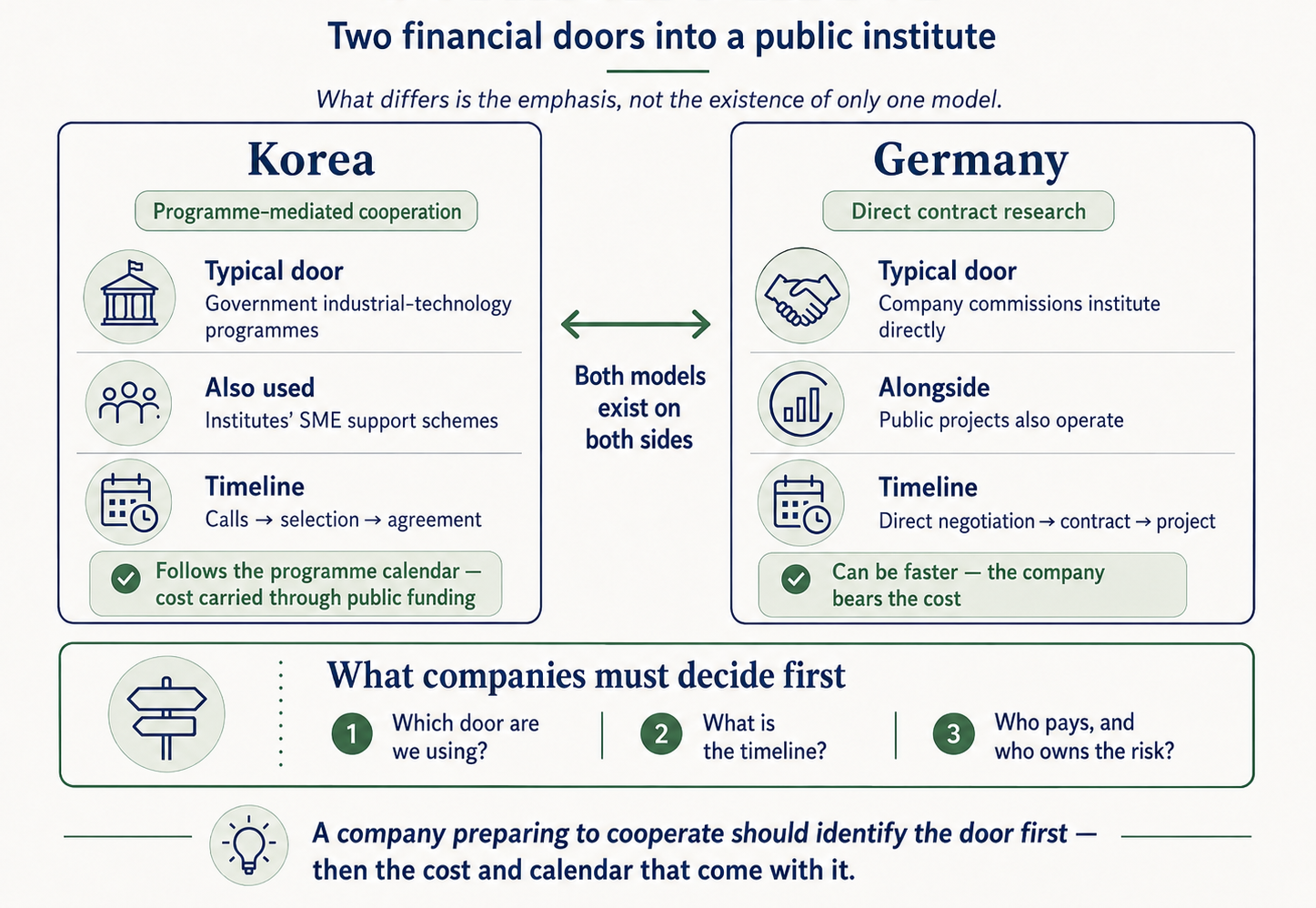
The difference connects to the questions of speed and responsibility that The Bridge Builder examined. Programme-mediated cooperation follows the calendar of calls, selection and agreements; direct contracts can be faster, but the company bears the cost. A company preparing to cooperate should first establish which door it intends to pass through — and what that door's timeline and costs are.
What the Thresholds Cannot Decide
Even with all five doors open, the thresholds do not complete industrialisation.
Diagnosis names the cause but does not decide who pays to fix it; a test report does not substitute for customer adoption or regulatory approval; The doors of acquisition, co-development and scale-up can move a technology forward, but they do not resolve who carries the cost and responsibility — or whether the material, process and economics will hold. Which problem to solve first, who carries the pilot cost, which customer's requirements to pass, who answers for commercialisation — these remain the company's decisions.
Institutes reduce risk. They do not assume it for the company.
The Limit Is a Beginning
The moment a company turns to a public institute is not a signal of failure. Knowing precisely the limit of what it can prove alone is where cooperation begins. The first need was not development but explanation — and a question that begins with explanation can move through diagnosis and verification into acquisition, co-development and scale-up.
A public institute can reduce the uncertainty a company cannot carry alone. But at some point the company must accept that evidence into its own process, commit its own capital, and answer to its own customers. The five thresholds are a map of where that beginning lies.
Next
Only the market can call a technology finished. But "the market" is an abstraction — it does not make judgements by itself. Whether to trust a result, whether to continue a pilot, whether to adopt — at every arrow, someone judged. Who?
Next: Before You Accept — Who Actually Makes the Judgement?
EDITORIAL NOTE
About This Reporting
Source basis, editorial framing and case limitations
Read
This article draws on official materials and public announcements from the Korea Atomic Energy Research Institute, KIST, KIAT, NST, Fraunhofer and Angelini Pharma.
The Kolmar BNH and Cureverse cases are described within the bounds of publicly available materials. Both are cases in which unusually many links of the chain were connected, and neither implies that most technologies follow the same route.
The CV-01 option agreement means a transfer of development responsibility, not completed commercialisation.
The “five thresholds” are a K-Welle editorial frame, not an official classification. “The Crossing” progress marker is a K-Welle editorial frame that reuses the chain of transition (From Research to Industrial Proof) as the shared coordinate of the four articles published together.
The comparison with Germany illustrates differences in financial and cooperative routes and is not a ranking. Partner institutions supported reporting access and had no role in the content.
Corrections: editor@k-welle.com
Sources · Linked on publication
- Korea Atomic Energy Research Institute — Kolmar BNH, Korea's first research-institute company, KOSDAQ listing
- Angelini Pharma — official announcement of the exclusive option agreement with Cureverse for CV-01 (October 2024)
- KIAT — international industrial-technology cooperation and commercialisation programmes
- Fraunhofer — contract research and industrial cooperation model
- ZEUS — national research-equipment and facility portal