After the MOU Three researchers answer the same six questions about what happens after an MOU — where cooperation begins, where it stops, and who must carry the next decision.
The System Navigator What makes a researcher stay in another system? Dr. Jung Han Choi reflects on research continuity, photonics, mobility and the culture that makes long-term careers possible.
Who Chooses the System? What should a researcher judge before crossing into another research system — and where does information stop and experience begin?
The Five Judges Who decides whether a technology moves from research to PoC, joint R&D and market — and where does the handover still break?
When Industry Needs a Public Institute Public institutes reduce technical risk. Companies decide what comes next.
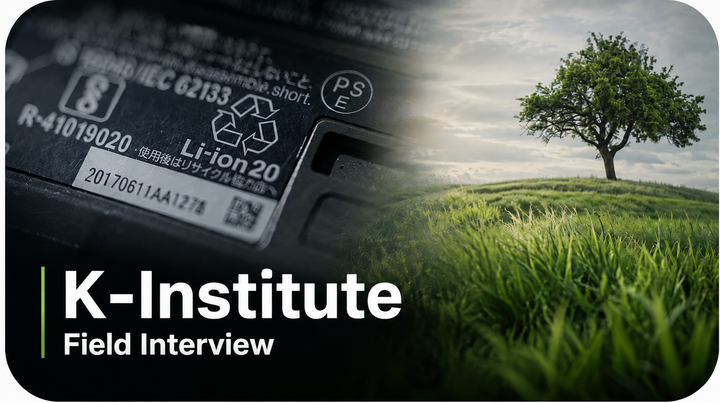
The Scale-up Scientist Inside battery black-mass recycling, what deep-tech scale-up must prove before reaching production.
From Research to Industrial Proof How research evidence becomes pilot-ready when funding, ownership and responsibility align — and why even a signed contract does not end the burden.