Who Owns the Lab Technology? Korea’s Missing Bridge to Startups
Korea’s labs produce papers, patents, and deep-tech ideas. But turning them into startups requires IP rights, equity control, capital, and visa fit — a bridge foreign founders must negotiate carefully.
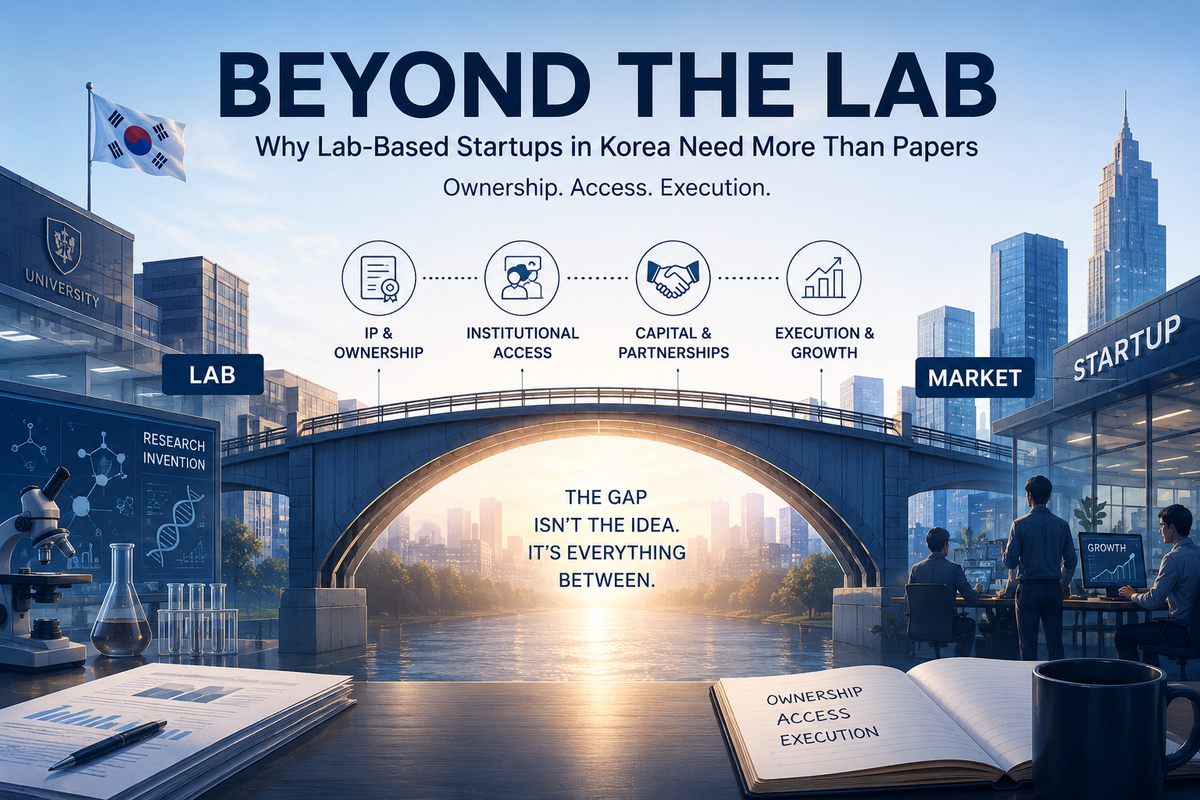
Korean labs produce a lot.
Papers.
Patents.
Algorithms.
Materials.
Medical devices.
AI models.
Biotech processes.
Platform technologies.
South Korea invests heavily in research and development. Universities and public research institutes generate steady research output. Inside the lab, results are produced.
But research output does not automatically become a company.
Technology has to move.
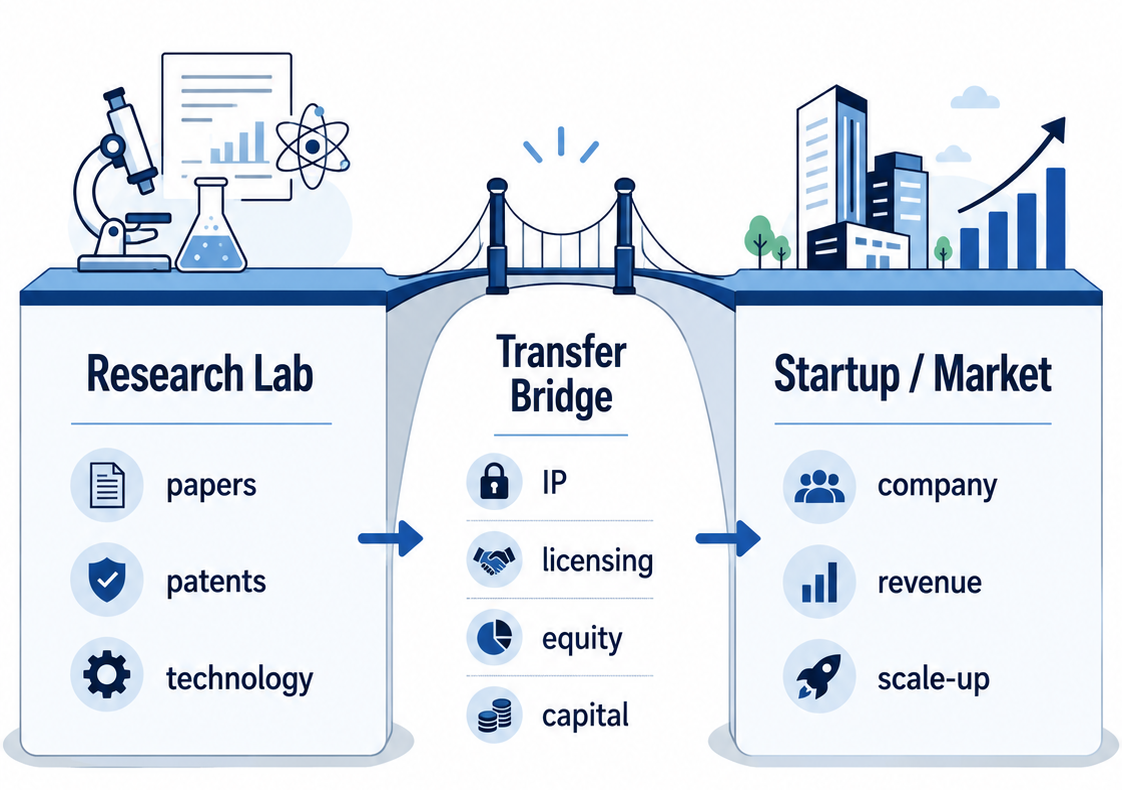
It has to pass through ownership, licensing, equity, investment, university administration, and sometimes immigration rules. For foreign founders, one more layer appears: the technology must also support visa eligibility.
Korea’s bottleneck is not only research production.
It is the transfer route.
Inside the lab, technology may exist. But the bridge from lab result to license, spin-off, startup, revenue, or scale-up company can be narrow and complex.
For a foreign researcher trying to build a company from lab technology, the first issue is not the size of the idea.
It is whether they can actually use the technology.
Key Takeaways
Korea is strong at research output, but weaker at technology transfer and commercialization.
The bottleneck is less about research quality and more about transfer structures, IP ownership, equity control, and follow-on capital.
Startup entry may be possible, but commercialization and scale-up often face the valley of death.
Lab technology may not belong personally to the founder. It may sit inside the university’s Industry-University Cooperation Foundation, or IACF, and technology holding structure.
Foreign graduate founders must align three things at once: IP, equity, and visa eligibility.
At the commercialization stage, papers prove the technology. Networks move it.
Research Output Is Not Yet a Company
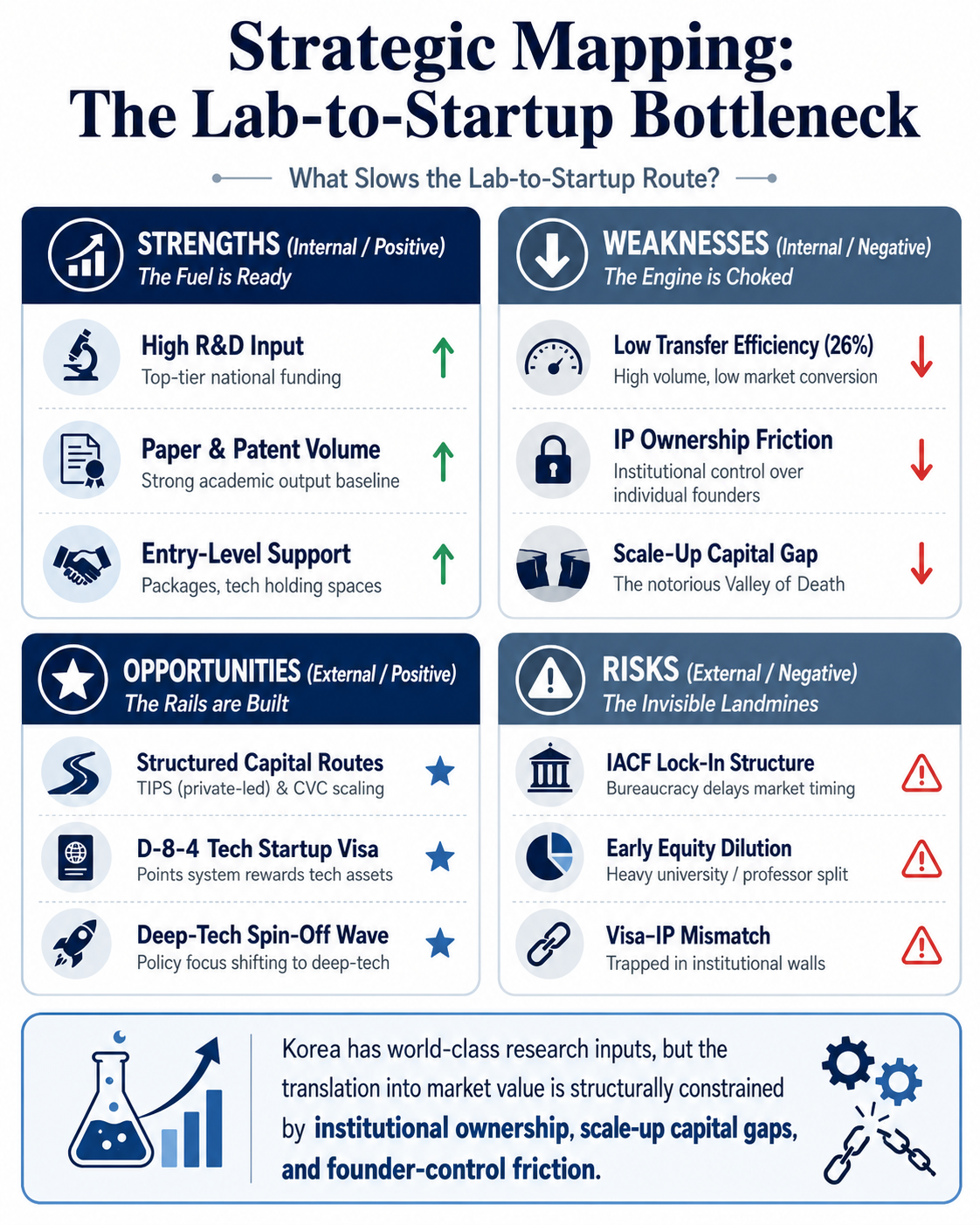
Korea spends heavily on research. Its R&D investment as a share of GDP sits among the highest in the world. Universities and public research institutes continue to produce papers, patents, and technical results.
Inside the lab, output is visible.
But the share of that output moving into the market remains limited.
The stark reality of K-commercialization:
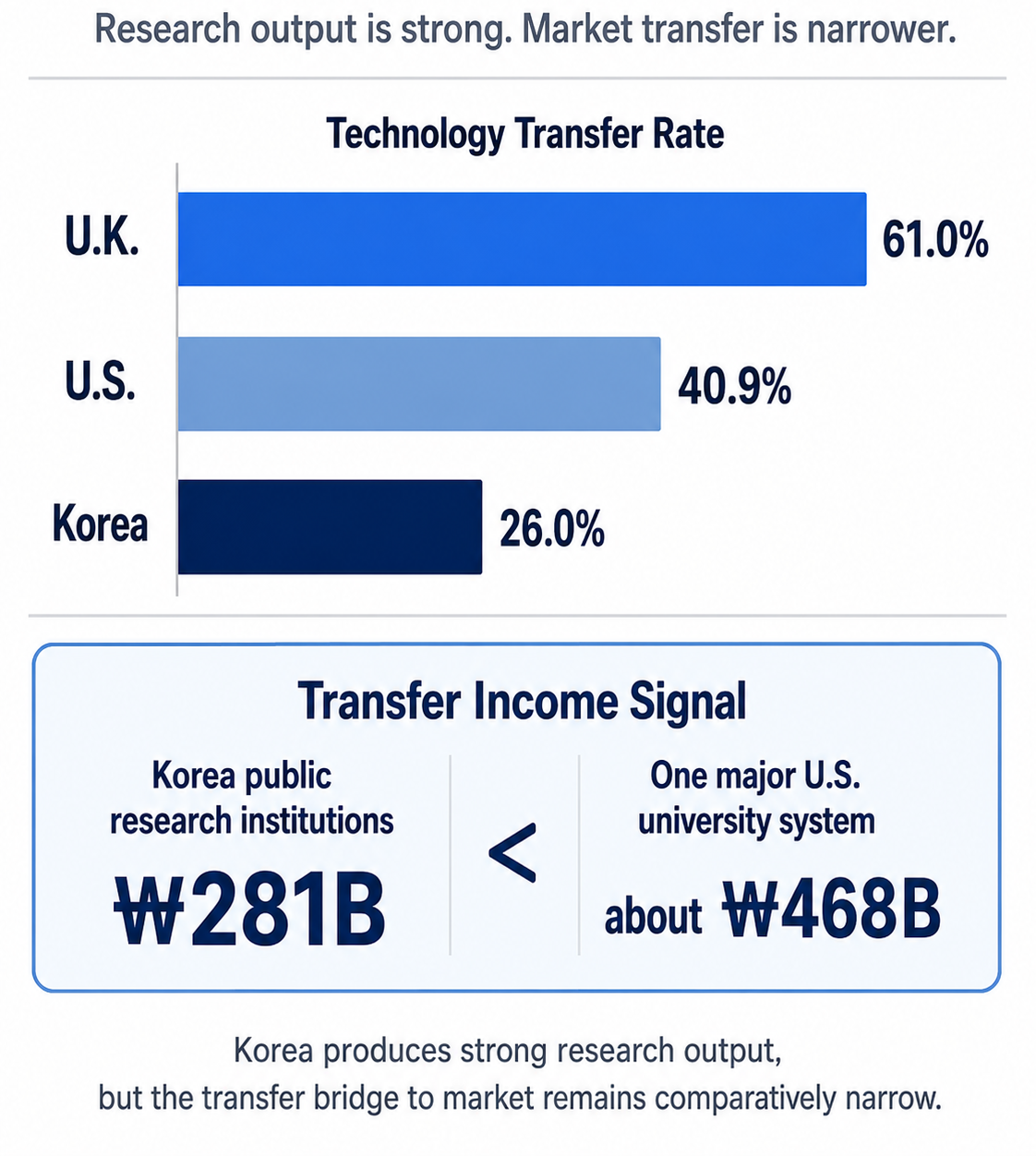
Research output is strong. Market transfer is weaker.
Korean universities’ technology transfer rate is often cited at around 26%. That is lower than the U.S. figure of 40.9% and the U.K. figure of 61.0%. In 2022, Korea’s public research institutions generated about ₩281 billion in technology transfer income. A single large U.S. university system has generated more than that through technology transfer revenue alone.
These numbers do not show weak Korean research.
They show the gap between research and commercialization.
Korea produces knowledge and technology inside the lab. But moving that output into companies, licenses, investments, and revenue creates bottlenecks.
Those bottlenecks appear in three places.
First, the funding gap between commercialization and scale-up.
Second, the IP and equity structure that passes through university offices and technology holding companies.
Third, the lack of execution networks that connect research output to investors, companies, and startup routes.
For foreign researchers, immigration adds another layer. The D-8-4 Technology Startup Visa looks at IP and technical capability. But the IP produced inside a lab may belong to the university structure, not to the individual researcher.
Lab technology can be the starting point of a startup.
But a starting point is not the same as control.
Why the Bridge Is Weak: The Funding Gap and the Valley of Death
Lab technology has to pass through several stages before it becomes a company.
The technology must be developed.
The patent position must be clarified.
The business item must be formed.
A prototype must be built.
Customers must be tested.
Regulation and certification may be needed.
Early revenue must appear.
Then follow-on investment must arrive.
The problem is that starting and arriving are different things.
Korea’s campus startup route can support entry. Programs such as the Pre-Startup Package, Initial Startup Package, Startup Support Divisions, OASIS, D-10-2, and D-8-4 help founders begin.
But commercialization and scale-up require more capital and more time.
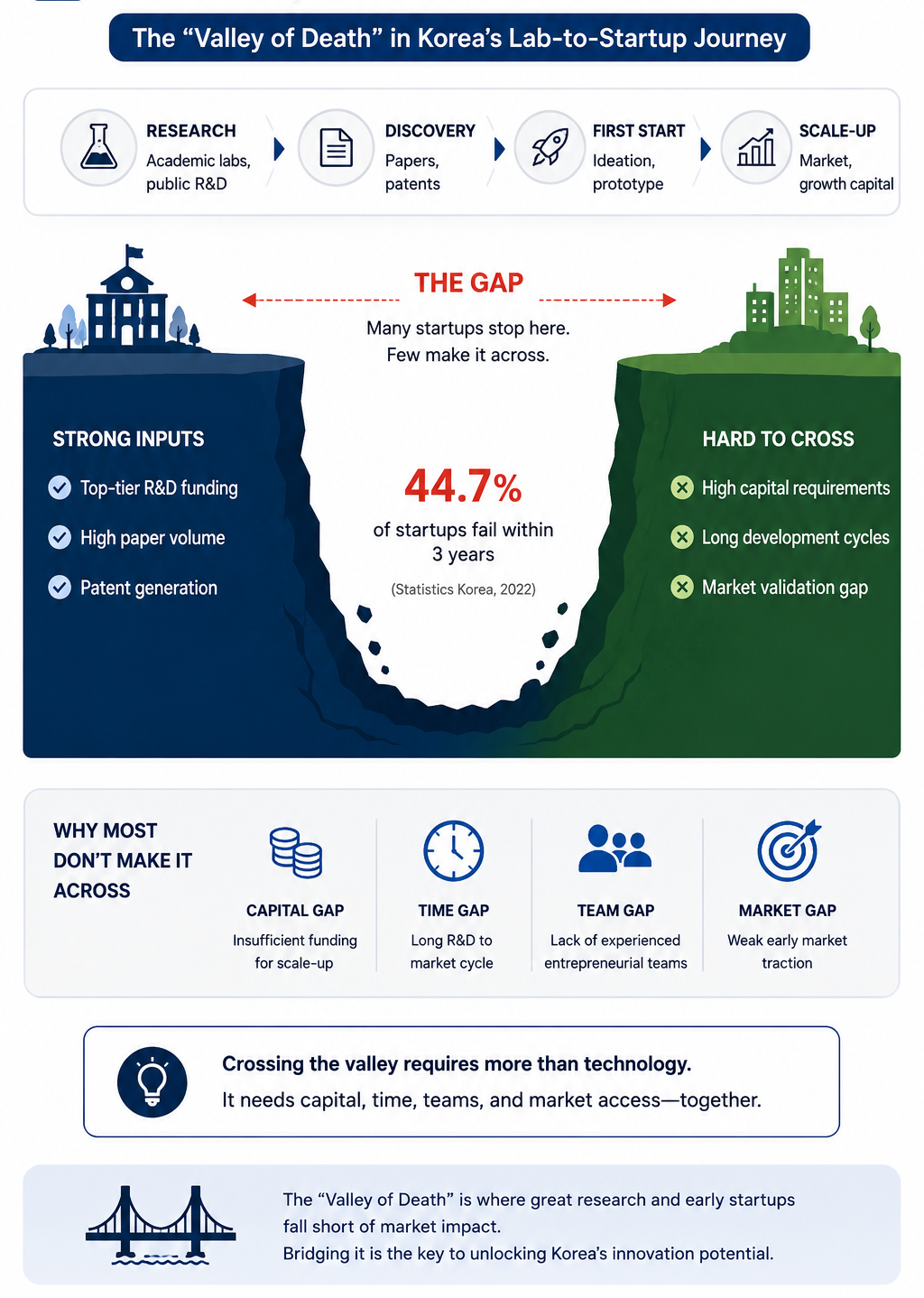
This is where the valley of death appears.
The technology exists.
The founding team exists.
But the capital needed for commercialization and growth can disappear.
At this stage, public grants may not be enough. Private venture capital may consider the company too early. Corporate venture capital may wait for clearer market signals.
Korea’s problem is not only that startups cannot begin.
Many can begin.
Fewer can arrive.
Why the Bridge Is Weak: IACF, IP, and Equity
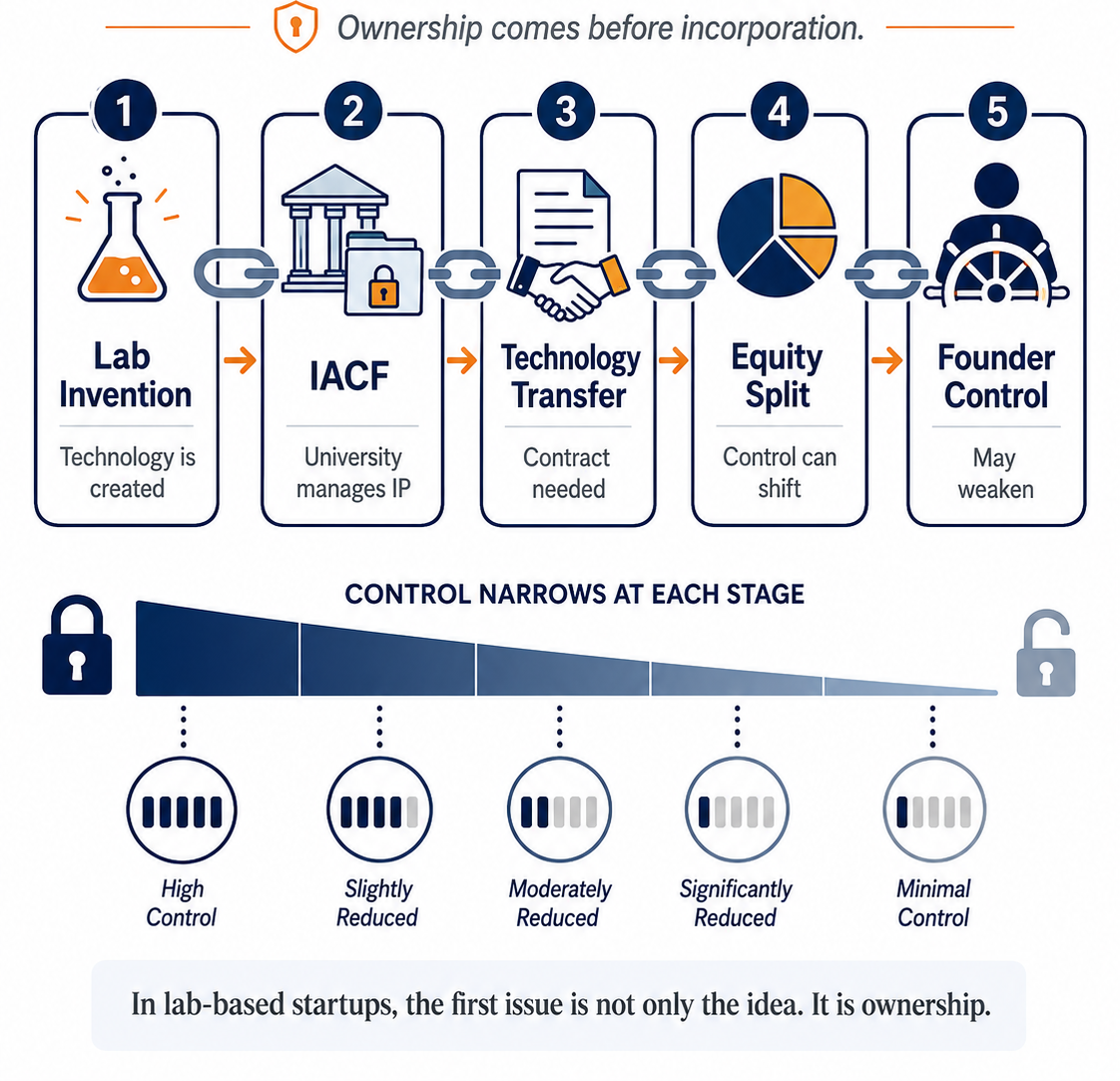
A deeper bottleneck is ownership.
Technology produced inside a Korean university lab may not belong personally to the researcher who helped build it. In many cases, it is managed through the university’s Industry-University Cooperation Foundation, or IACF.
Four letters foreign researchers should remember when searching Korean university websites: IACF
An IACF manages research contracts, patents, technology transfer, licensing, and other intellectual property matters.
This structure is necessary. University technology often comes from public funding, university facilities, professor supervision, and lab infrastructure.
But when lab technology moves toward a spin-off, the same structure can become a lock.
A researcher cannot automatically put lab technology into a company just because they helped create it. A technology transfer agreement may be needed. Patent rights, know-how, data, and usage scope may all require negotiation.
Then equity enters.
The professor, university, founder, technology holding company, and investors may all become part of the ownership structure. Founder control can weaken from the beginning.
For foreign researchers, this issue is even more direct.
The D-8-4 Technology Startup Visa may require IP and technical capability. But if the IP is locked inside the IACF structure, visa eligibility and actual control can move in different directions.
A founder may have built the technology.
But they may not own it.
Professor Startups: Allowed, but Bounded
Professor startups exist in Korea.
A professor may take leave or receive permission for outside work, create a company, and commercialize lab technology. University equipment, research staff, papers, and patents may become the foundation of the company.
At first glance, this may resemble U.S.-style professor entrepreneurship.
But the structure is different.
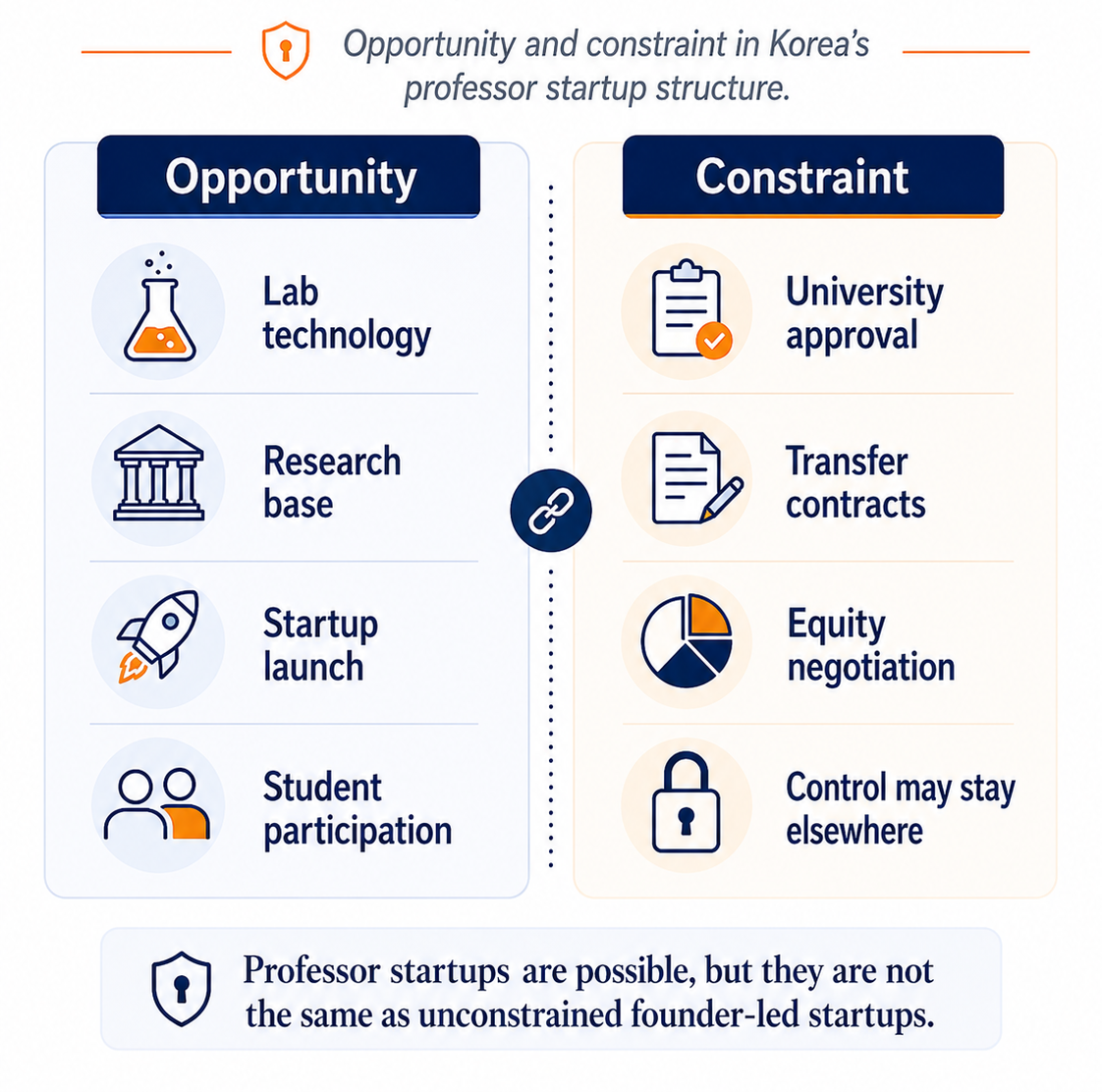
Professor startups are allowed, but they are bounded by leave rules, outside-work approval, technology transfer contracts, equity arrangements, reputational risk, student supervision, and the possibility of returning to the university after failure.
A company can be formed.
But the founder may not control everything alone.
The university, professor, IACF, and technology holding company may all sit inside the structure.
For foreign graduate students, a professor startup can be an opportunity. It can connect lab technology to a company, and students may become early members.
But the company’s ownership structure may already lean toward the professor and the university.
A professor startup is not just an opportunity.
It is a structure that must be read before joining.
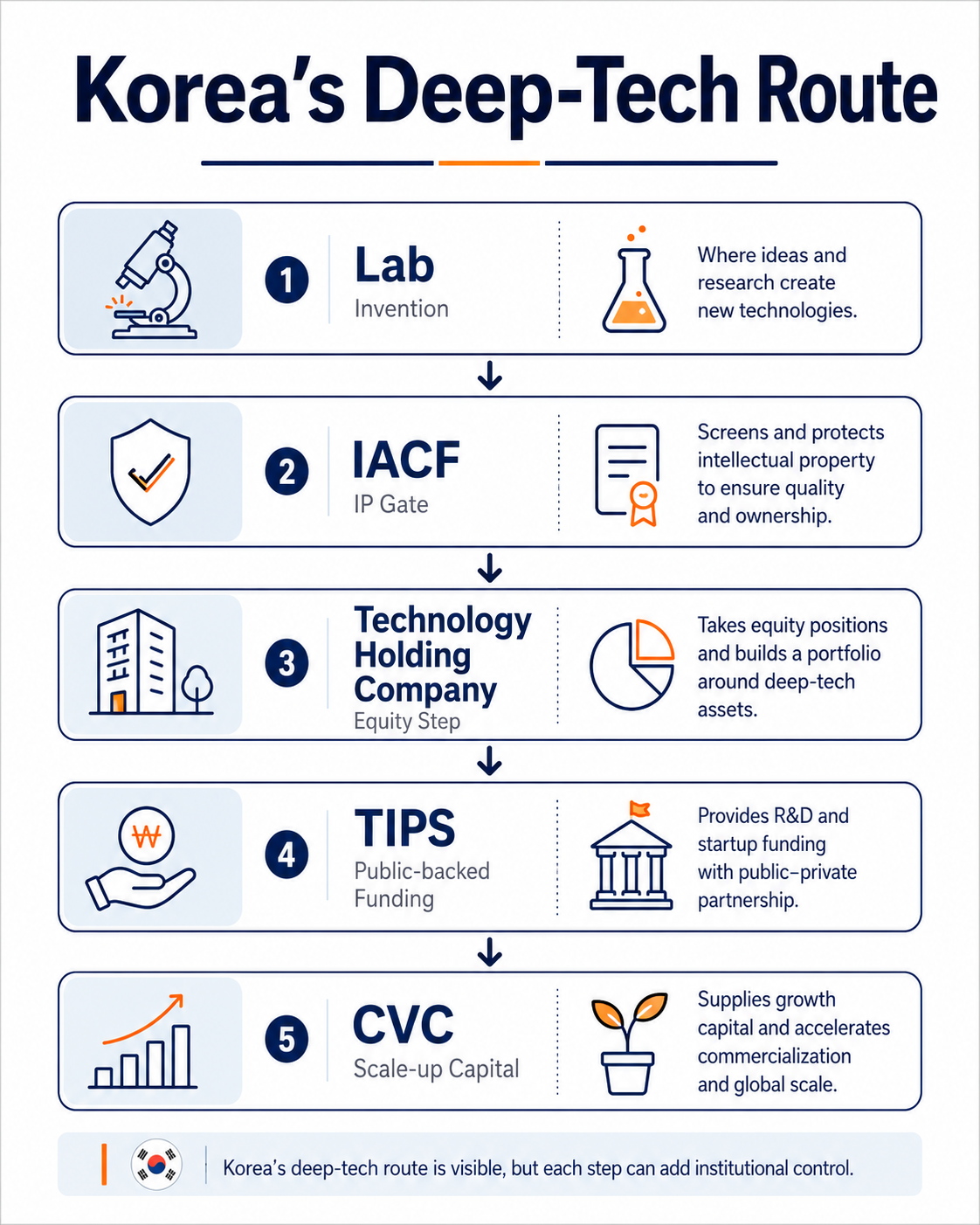
Korea’s Deep-Tech Route: Lab → IACF → Technology Holding Company → TIPS → CVC
Korea’s deep-tech startup route is relatively standardized.
Technology begins in the lab.
The IP is managed through the IACF.
A technology transfer agreement may follow.
A university Technology Holding Company may invest or take equity.
The company may then enter TIPS, Korea’s government-backed, private-led startup investment program. In TIPS, private investors or accelerators select promising startups first, and public follow-on support can come afterward.
As the company grows, it may connect to CVC. CVC stands for Corporate Venture Capital, the investment arms of large companies. Corporate groups may invest in or partner with technology startups for strategic reasons.
The route has strengths.
There are institutions.
There are support channels.
Public and private capital can connect.
University technology can move into a company.
But the route also has limits.
There are many institutions.
Many approvals.
Many equity claims.
And the process can be slow.
A founder may create a company without fully controlling it from the beginning.
Bayh-Dole and Korea’s Benchmark Problem
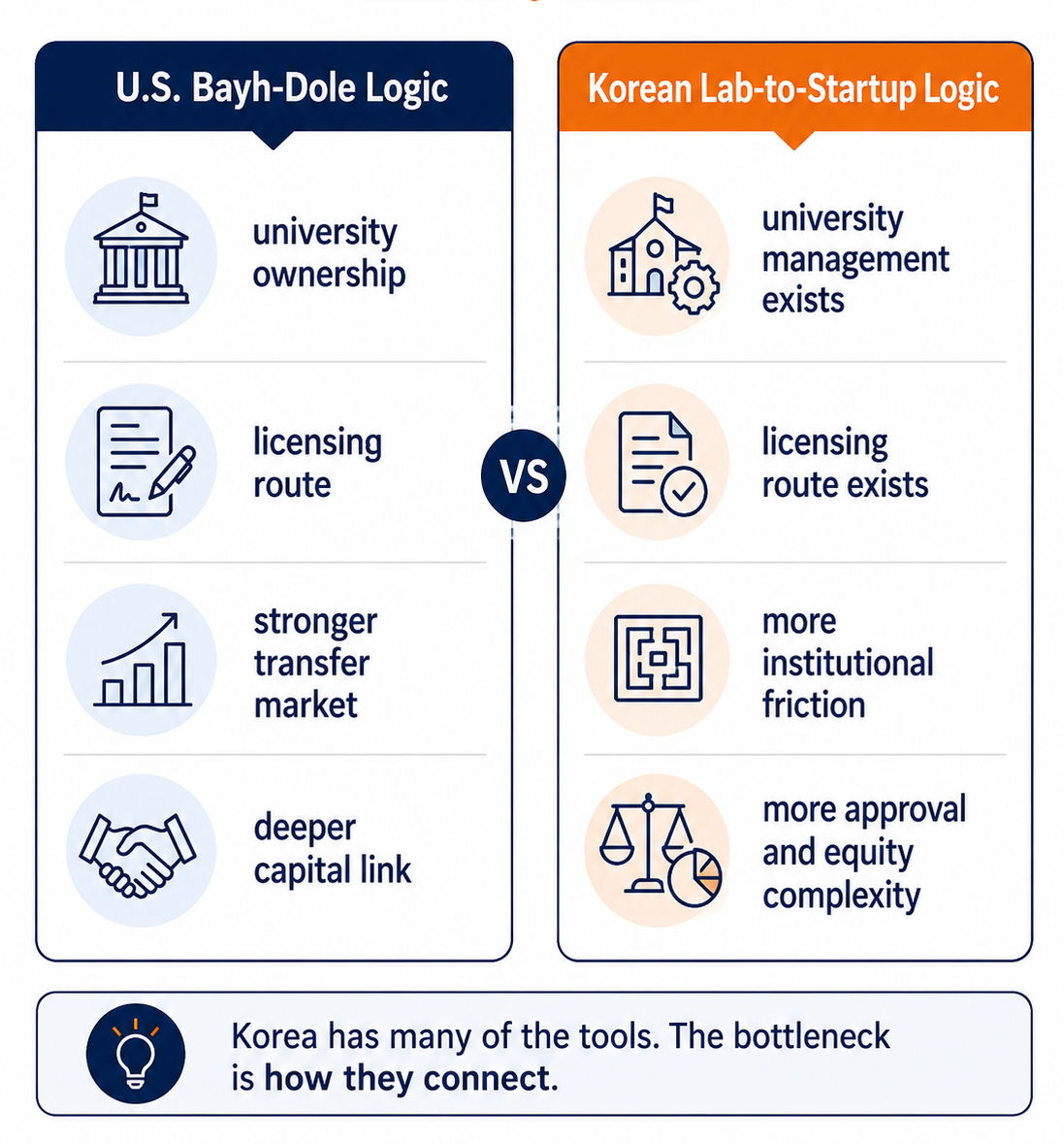
The U.S. Bayh-Dole Act is one of the key reference points for university technology transfer.
Enacted in 1980, the law allowed universities and research institutions to own, patent, and commercialize inventions developed with federal research funding. It strengthened the legal basis for universities to manage discoveries and move them toward the market.
Korea has built institutions in a similar direction.
IACFs, technology holding companies, technology transfer agreements, and professor startups are all designed to move research results toward commercialization.
But importing a policy logic does not automatically import the operating system around it.
In the U.S., university technology transfer offices are connected to deeper private capital markets and more mature licensing practices.
In Korea, the university management structure, professor incentives, equity practices, and follow-on investment market do not always align smoothly.
The issue is not the absence of institutions.
The institutions exist.
The friction lies in how they connect.
When a Foreign Graduate Student Starts a Company: IP, Equity, and Visa
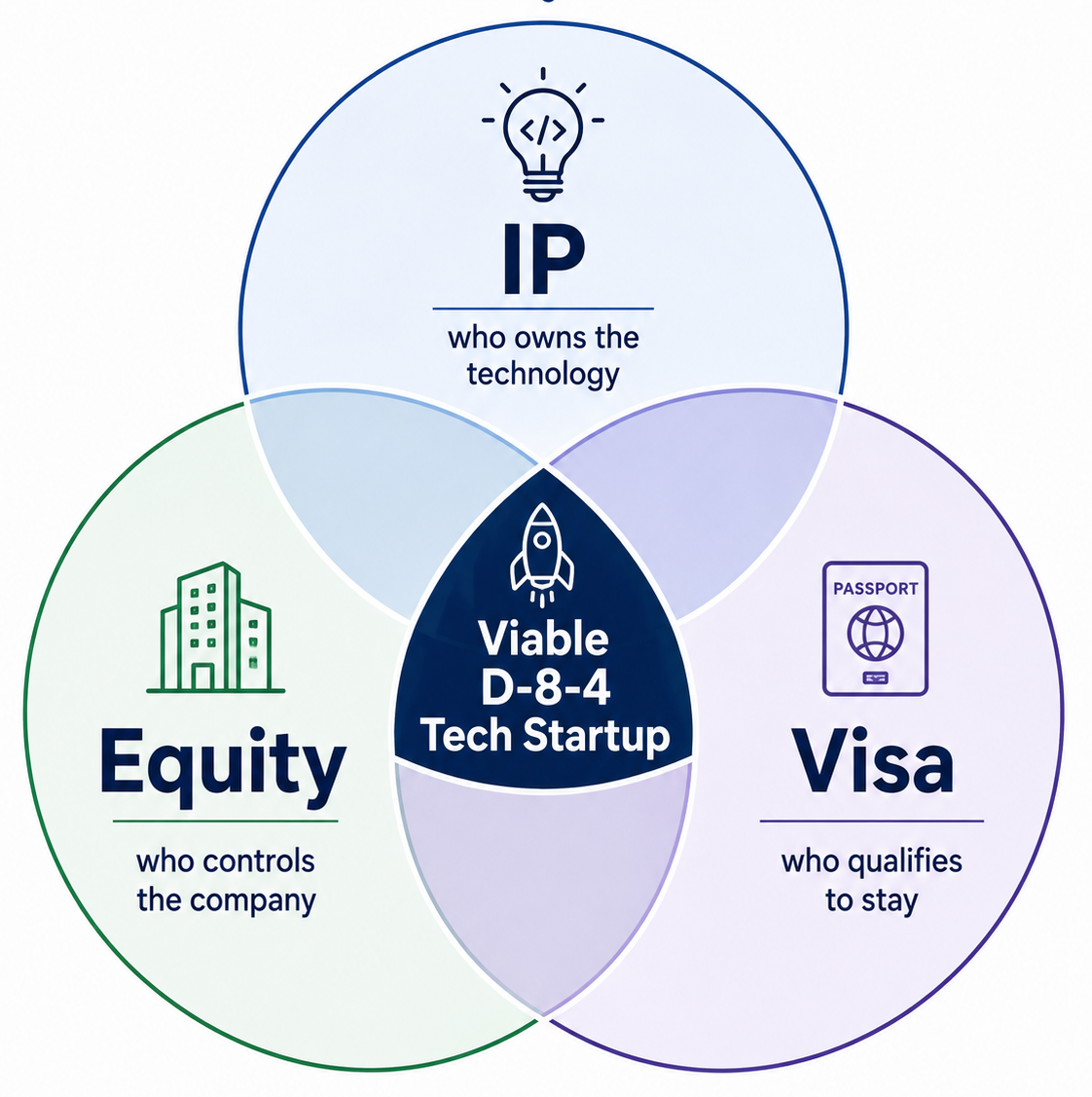
A foreign graduate founder must align three things at once.
First, IP.
Who owns the technology?
Second, equity.
Who controls the company?
Third, visa.
Can the company and technology support the founder’s stay in Korea?
The D-8-4 Technology Startup Visa looks at technical capability, IP, incorporation, and business registration. But if the IP sits inside the university, the technology transfer agreement is unfinished, or the equity structure is unclear, the visa route becomes more complicated.
These three elements are connected.
Weak IP weakens the visa argument.
Weak equity weakens founder control.
An unstable visa weakens the company’s operating base.
For foreign founders, the issue is not only the idea.
It is whether IP, equity, and visa structure can align.
From Papers to Networks: The Execution Route
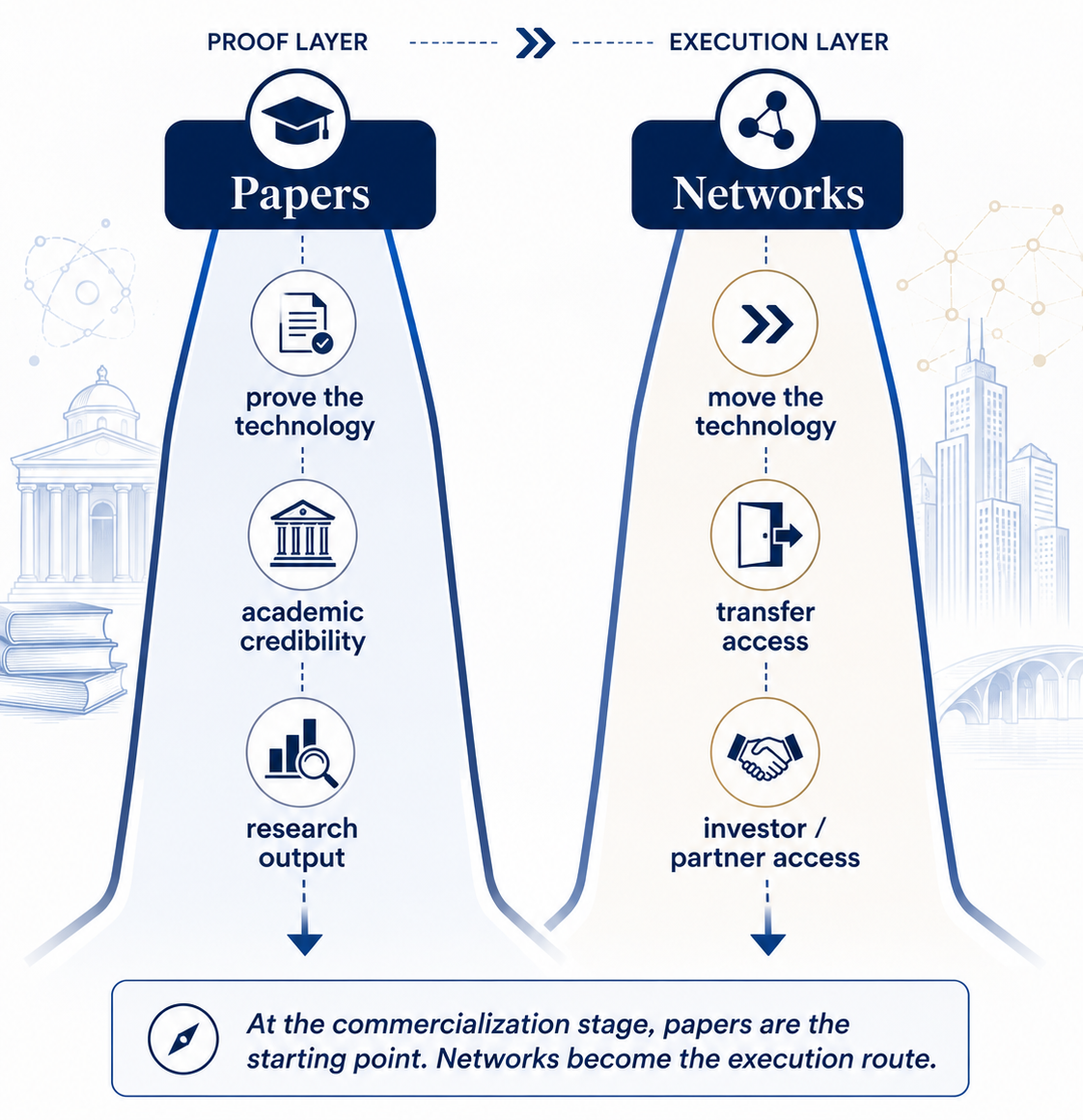
Papers matter.
A paper proves technical capability. It builds credibility. It can support patents and show that the technology has a research base.
But commercialization requires more than papers.
The technology must connect to the IACF.
The founder must negotiate with a technology holding company.
The company may need a TIPS operator.
Investors and corporate partners must be reached.
At this stage, what matters is not networking as social performance.
It is network as execution infrastructure.
Papers prove the technology.
Networks move it.
This is where foreign researchers may become vulnerable. They may have the technology, but not the institutional or investment network needed to move it out of the lab.
Without those links, technology can remain inside the university.
Decision Note
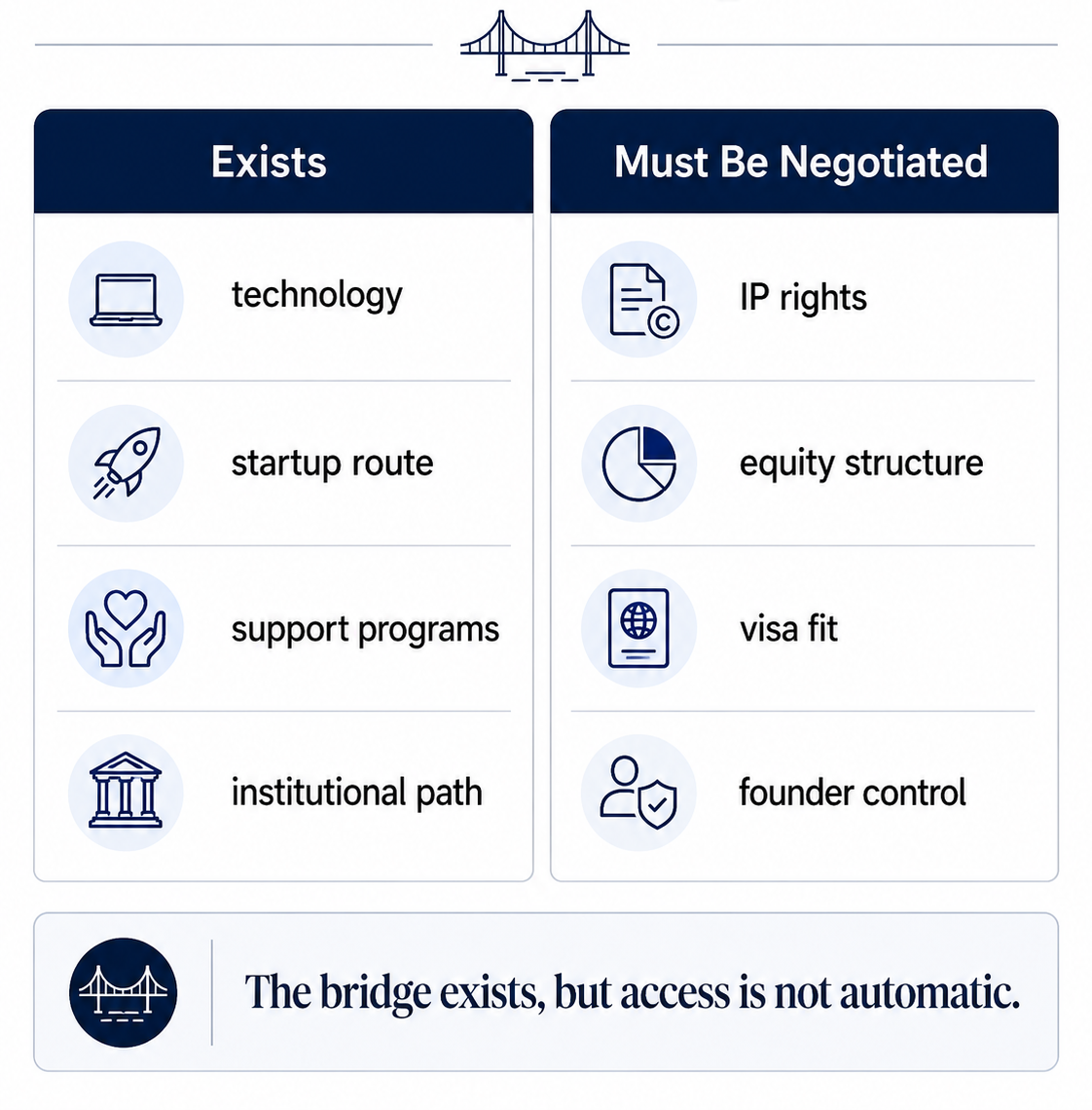
There is a bridge between Korean labs and the market.
But it is not wide.
Technology may come from the lab, but IP may be managed by the IACF. A professor may open the startup route, but equity and control may be negotiated inside the university structure. TIPS and CVC may create follow-on routes, but reaching them requires networks and market signals.
Foreign researchers need to check more before crossing this bridge.
Before asking whether they built the technology, they need to know whether they can use it.
Before asking whether they can start a company, they need to know whether they can keep enough control after starting.
Before asking whether they can qualify for a visa, they need to know whether the IP and portfolio supporting that visa actually sit inside their company structure.
Lab-based startup formation in Korea is not impossible.
But it is not simply open.
It must be negotiated.
Cross-read
Ep.10 — Campus Startup Ecosystems
Ep.11 — Who Owns the Lab Technology?
Ep.12 — Returning Diaspora Researchers