Don’t Just Look at SKY
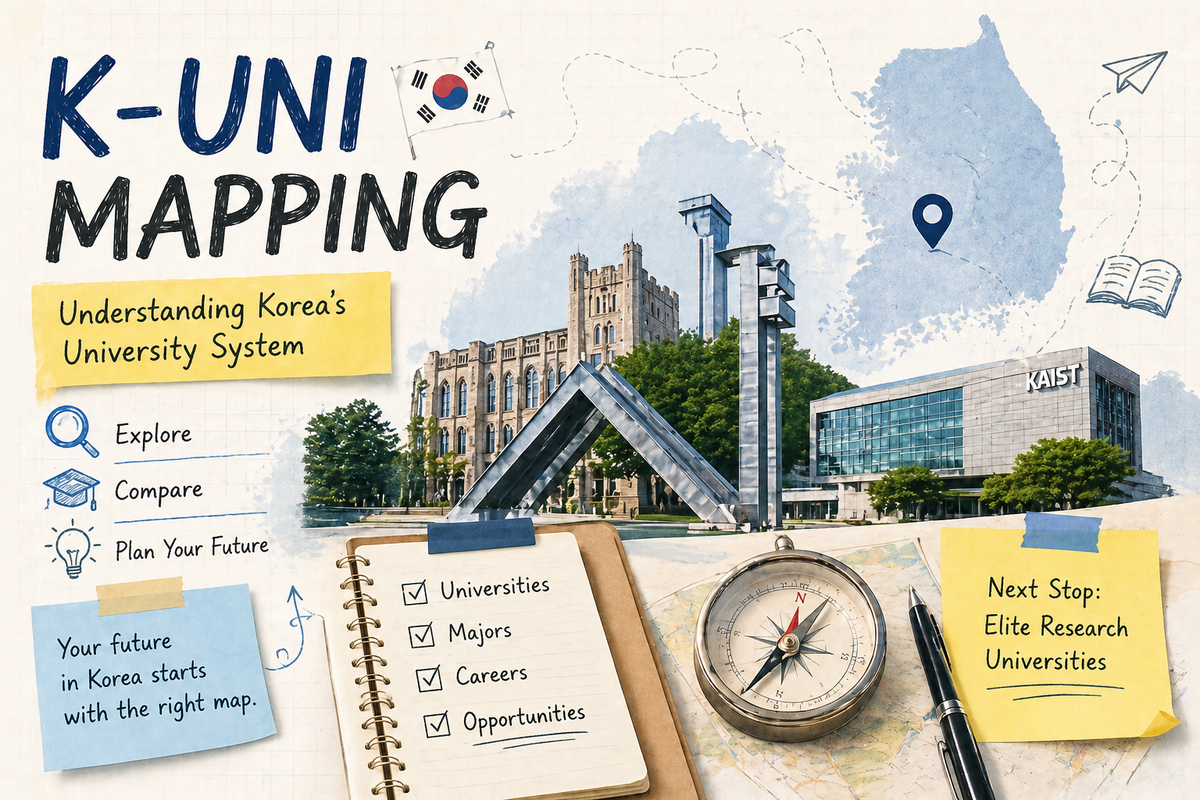
A Guide to Korean Universities for International Students
For international readers, choosing a Korean university is not primarily about which university is “best.”
The more relevant question is:
Which university provides the right experience, visa pathway, and career trajectory for my purpose of staying in Korea?
Inside Korea, the hierarchy of universities is widely recognized.
Names such as SKY, Seong-Seo-Han, and Jung-Kyung-Wae-Si represent a ranking culture embedded in Korea’s hiring market and social capital structure.
- SKY: Seoul National University, Korea University, Yonsei University
- Seong-Seo-Han (성서한): Sungkyunkwan University, Sogang University, Hanyang University
- Jung-Kyung-Wae-Si (중경외시): Chung-Ang University, Kyung Hee University, Hankuk University of Foreign Studies, University of Seoul
However, international students navigate a different socio-economic reality, where prestige does not always translate into visa security or employment outcomes.
The same diploma does not operate the same way for foreigners as it does for Korean graduates.
So the question must change.
Change the Question
Traditional question
Which university in Korea is the best?
The question international students actually need
Which university system aligns with my purpose for staying in Korea?
Korean universities are not a single ranking table.
They unfold as four different maps depending on the purpose of stay.
K-Uni Mapping
Four Maps for International Students
| Map | Key Question | University Selection Criteria |
|---|---|---|
| Short Stay | How much will this experience change me? | Cultural immersion, teaching style, interaction structure |
| Career Preparation | How quickly can I become job-ready? | Major, internships, visa pathways |
| Long-Term Settlement | Can I grow sustainably within the Korean system? | Networks, industry connections |
| Research / Graduate | Is the research environment strong? | Labs, supervisors, funding |
The same university can occupy very different positions across these maps.
Three Ways to Read the Korean University System
Choose the model that matches your purpose of stay.
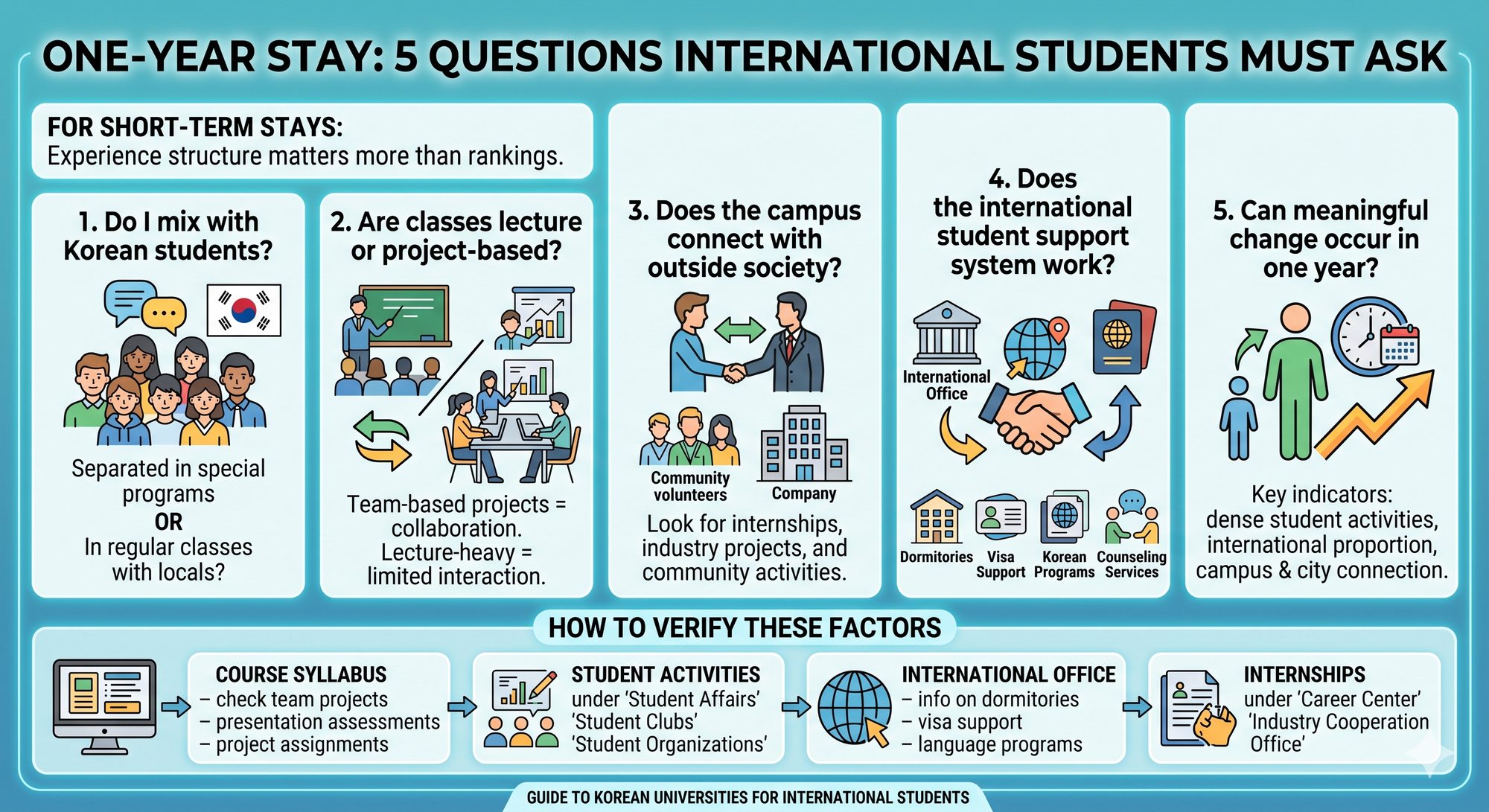
1-Year Stay
Experience Model
- Exchange students
- Short-term study
- Visiting research
- Language programs
2–5 Year Stay
Degree + Career Model
- Undergraduate degree
- Professional degree programs
- Career-preparation stay
Research Track
Graduate Research Model
- Graduate school
- Research lab participation
- Advisor-led projects
- Industry-linked research
In the short-stay model, the university is primarily an experience environment.
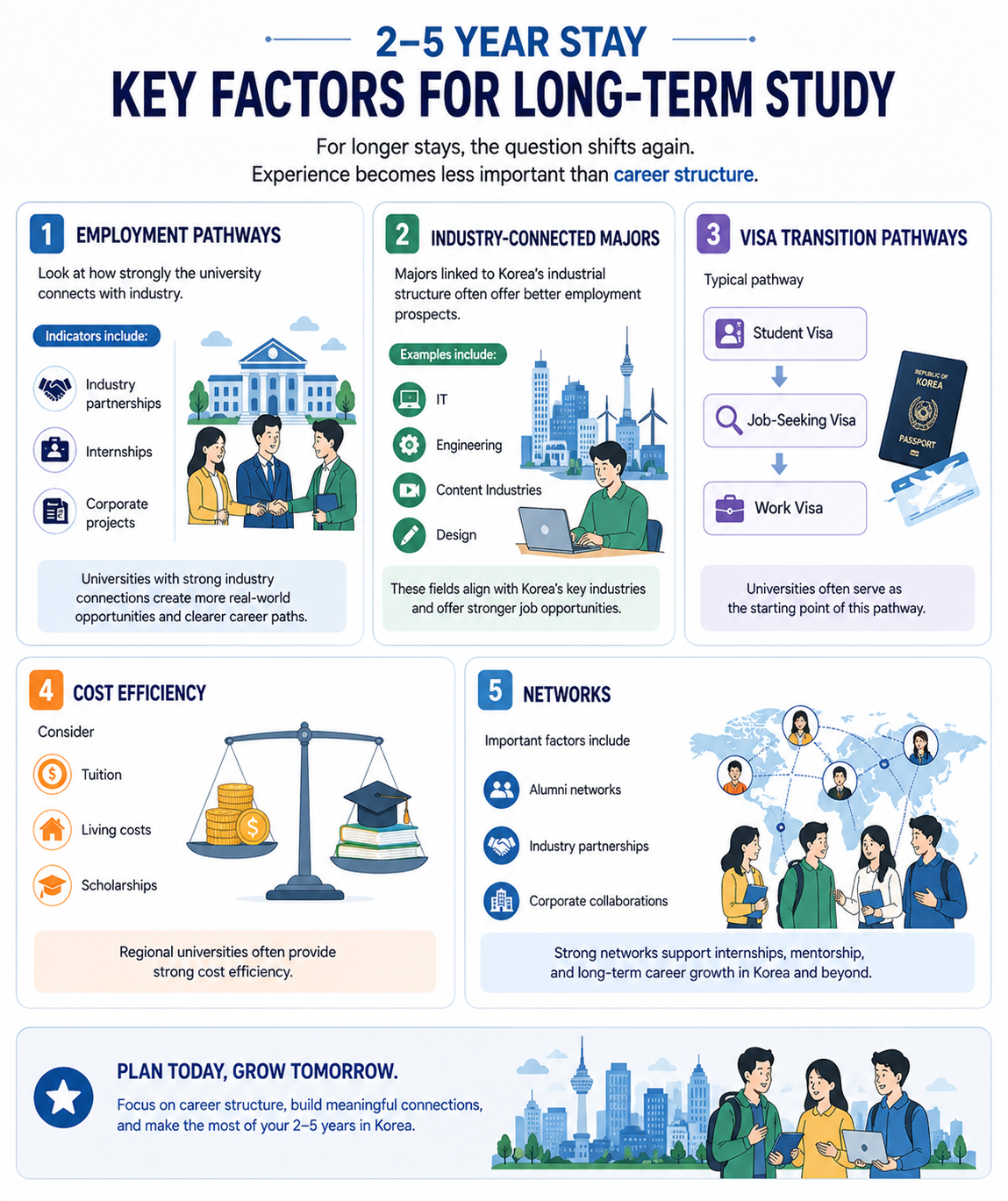
In the 2–5 year model, the university becomes a career system combining:
- visa pathways
- industry connections
- professional networks
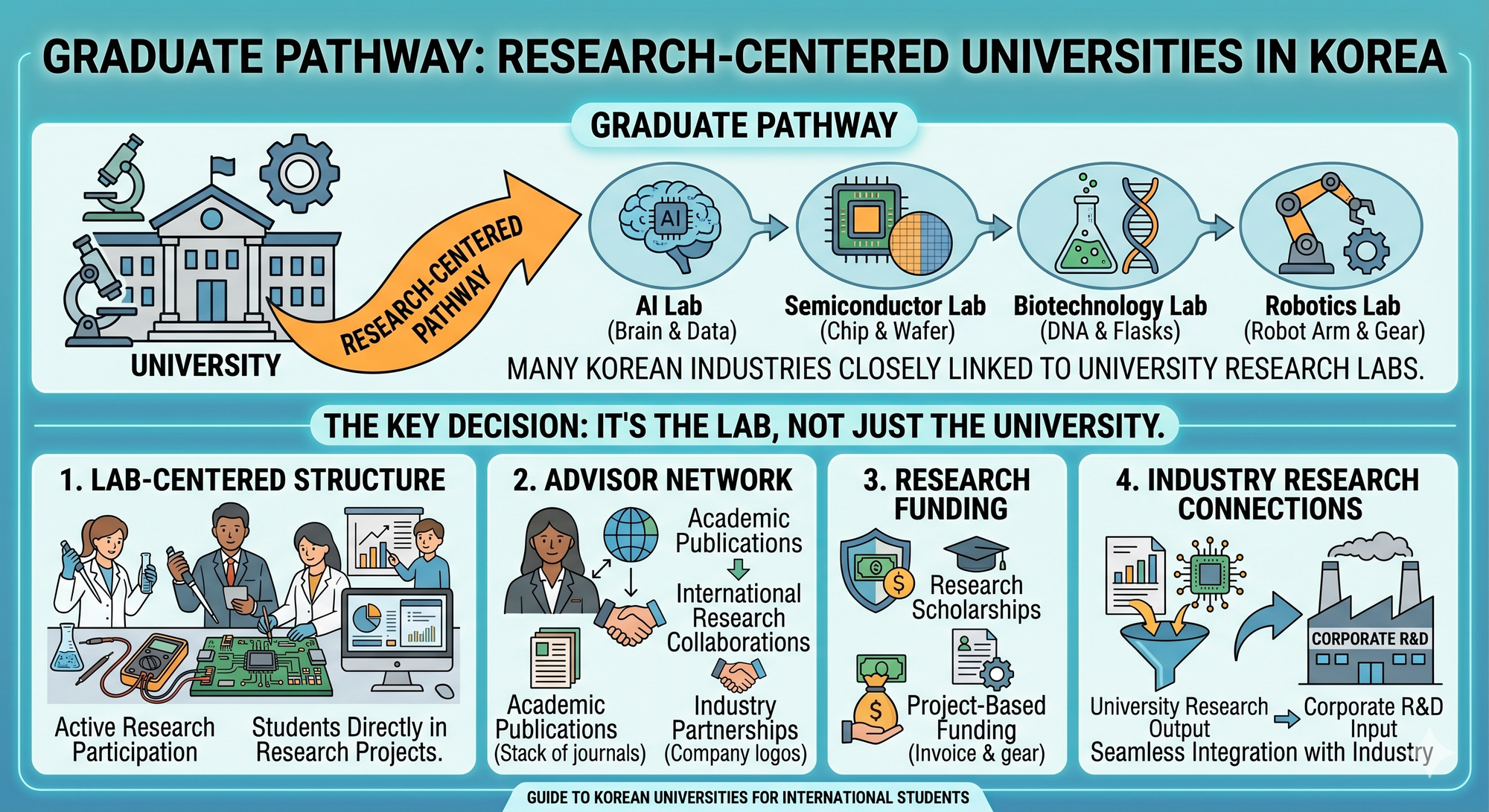
In the research track, the key question changes again.
The real question is not which university — but which lab.
In Korea, industries such as AI, semiconductors, biotechnology, and robotics are closely connected to university research labs.
SKY, Metropolitan Universities, Regional National Universities, Junior Colleges : Four Different Tools
If Korean universities are viewed through a hierarchical lens, everything appears below SKY. But when viewed as tools, the system looks very different.
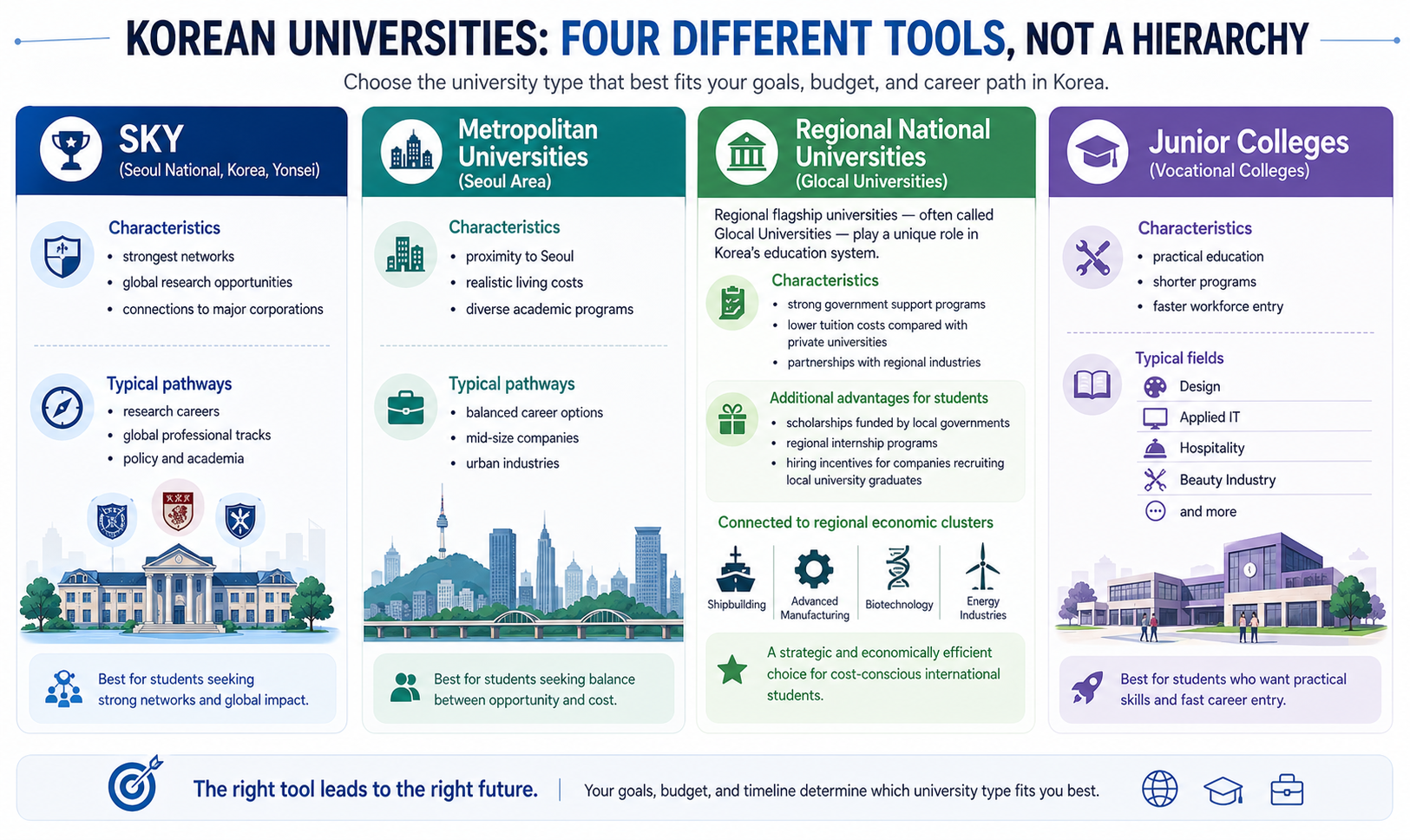
For international students, these four categories are not a hierarchy.
They are a toolkit.
Strong Major Map for International Students
In Korea’s labor market, certain majors provide clearer entry points for foreign graduates. Most share one trait: results-based evaluation.
| Major | Why It Works |
|---|---|
| IT / Software | Portfolio-driven hiring |
| Design / Digital Media | Your work becomes your resume |
| Hospitality / Tourism | Language advantage |
| Nursing / Healthcare | License-based profession |
| Mechanical / Manufacturing | Linked to industrial complexes |
In these fields, skills and outcomes often matter more than university prestige.
Five Mistakes International Students Often Make
Many international students fail not because of ability, but because they misunderstand the system.
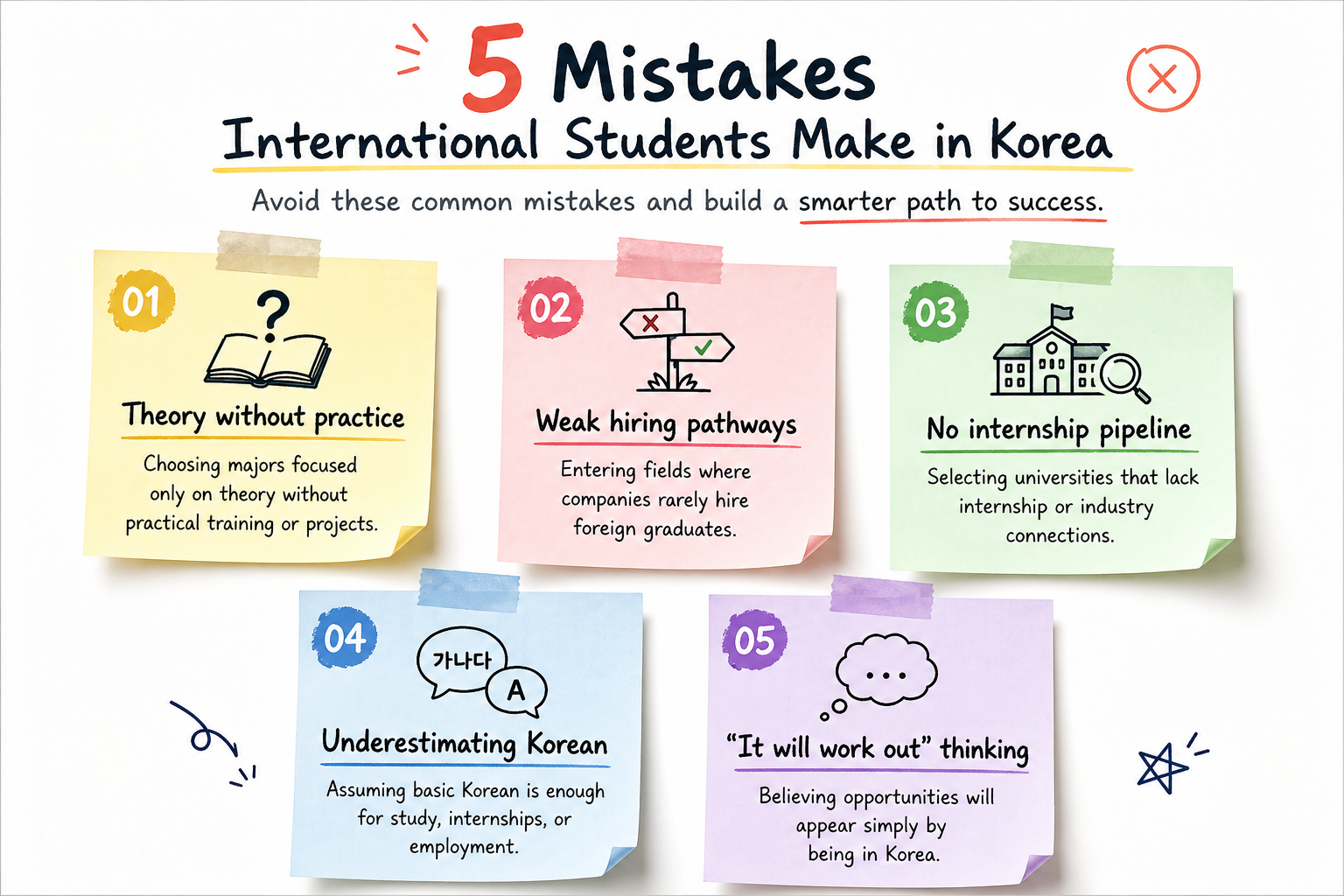
The Korean labor market favors strategic alignment over vague aspirations.
K-Uni Mapping : Four Maps
Short Stay
Experience transformation
project classes · interaction
Career Preparation
speed of practical entry
internships · visa pathway
Long-Term Settlement
sustainable network
alumni · industry
Research
research environment
labs · funding
For international students, choosing a Korean university is not about which university is best.
It is about identifying which university provides the right combination of
- experience
- visa pathway
- career trajectory
for your purpose of staying in Korea.
Tools are not evaluated by hierarchy.
They are evaluated by fit.
Dawn Chang, PhD · Editor-in-Chief, K-Welle · editor@k-welle.com