Korea-Europe AI Partnership
Why Dialogue Matters More Than Technology
Korea–Europe Dialogue as Cultural, Institutional, and Societal Infrastructure
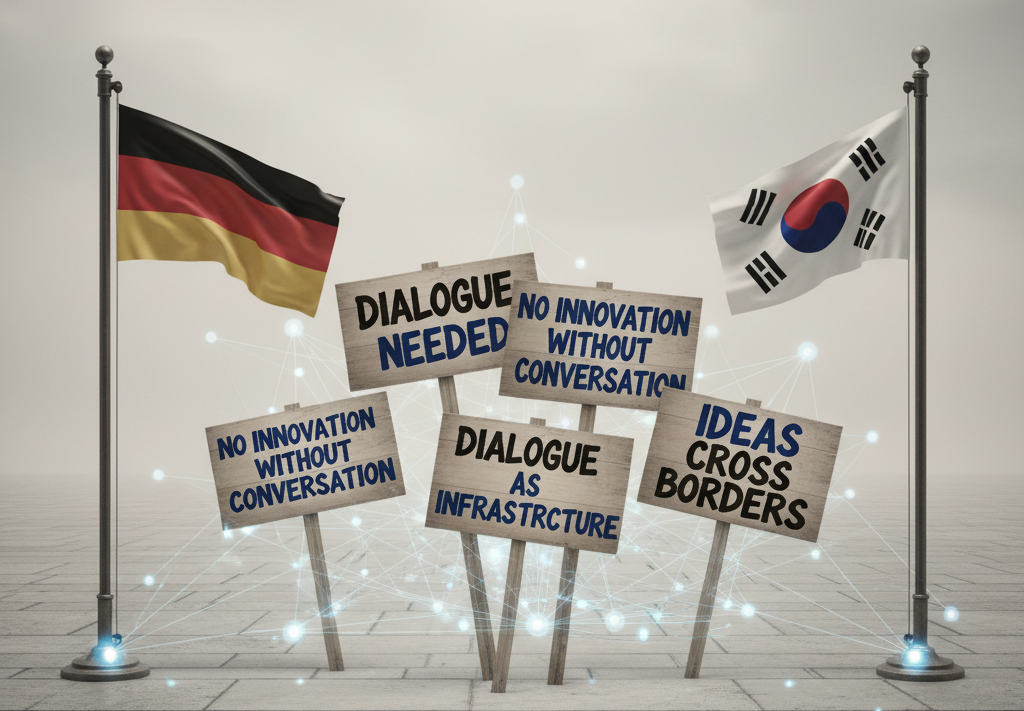
In an era defined by AI, demographic change, and shifting global power, one thing is becoming clearer: societies do not move through technology alone — they move through the ways they converse.
Korea and Europe, especially Germany, differ not only in systems but in tempo, philosophy, and expectations. Their potential does not lie in becoming similar, but in becoming connectable. And connection requires dialogue as infrastructure.
1. Individual Layer — Conversation Begins with Culture
The dialogue between Korea and Europe did not begin with technology or government policy. It began with people, and most often, with culture.
A representative example is the Korean Film Festival Frankfurt, founded not by a Korean institution but by German students, researchers, and young cultural organizers. What began as a small, volunteer-driven festival has grown over more than a decade into the largest Korean film festival in Europe.
 Andrea Geißler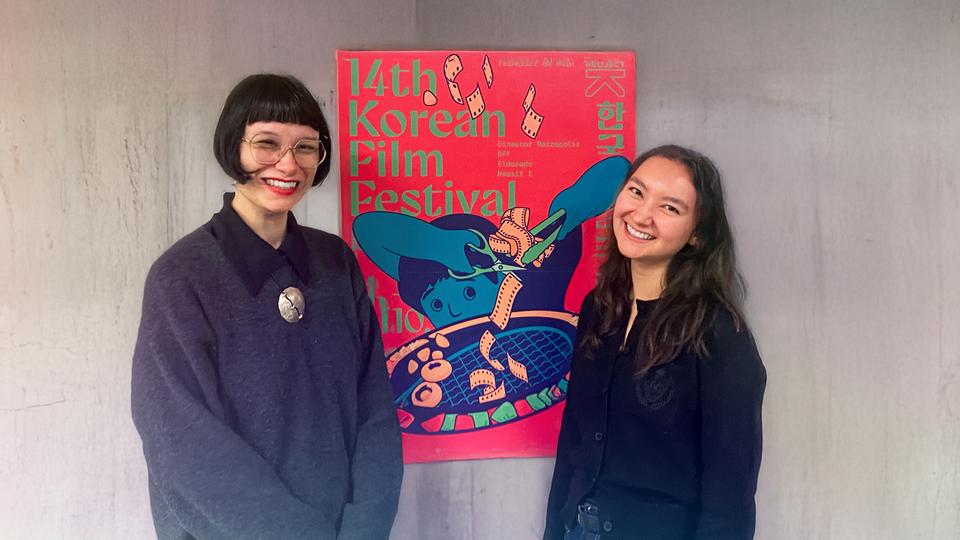
Through film, audiences encounter Korea’s social rhythms, generational tensions, emotions, and urban life.
These cultural experiences often unfold into deeper forms of engagement:
- learning Korean,
- studying abroad in Korea,
- joining research groups and cultural projects,
- or engaging with Korean startups and creative industries.
Cultural dialogue thus becomes more than entertainment. It becomes an intellectual gateway, a personal infrastructure through which young Europeans expand their worldview and eventually enter academic, professional, and creative cooperation with Korea.
In this sense, individual-level exchange is not a single event but a trajectory: experience → emotional connection → knowledge expansion → career exploration.
2. Institutional Layer — The Architecture of Organizing Dialogue
On a larger scale, dialogue between Korea and Europe takes shape through
universities, companies, governments, and cultural institutions.
The German Innovation Days 2025, held in Seoul from November 20 to December 17,
illustrate this well.
Over 40 events brought together German embassies, Korean media institutions,
AI firms, manufacturing companies, research institutes, and startups.
Here, “innovation” was not a theme — it was a shared platform for structured conversation.
Similarly, the Germany–Korea AI Forum 2025 convened the Zuse Institute Berlin (ZIB), Fraunhofer Korea, alongside KAIST, ETRI, leading Korean universities, and private sector AI labs.
 Jie Ye-eun
The forum addressed physical AI, robotics, ethics, regulation, and industrial application. It demonstrated how differently Korea and Germany approach the same technology — yet how productive their dialogue becomes when structured well.
However, these collaborations also reveal the limits.
Different administrative speeds, organizational cultures, and research priorities
mean that partnerships can remain one-off unless supported by an infrastructure that archives, curates, and intermediates the exchange.
Sustained collaboration requires:
- archiving knowledge and event outputs,
- curating follow-up pathways,
- and mediating institutional differences.
Without such structural support,
events accumulate but structures do not;
people connect but knowledge does not persist.
3. Societal Layer — When Dialogue Becomes a Public Infrastructure
Even when individuals and institutions connect well, the societal layer reveals deeper differences — the layer of values, norms, and long-term visions.
During his recent visit to Korea,
German AI researcher Kinka Schuhmacher
offered a concise summary of the Korea–Germany divergence in AI:
- Korea sees AI as a national execution task —
something to be tested quickly, deployed boldly, and integrated into society. - Germany and Europe prioritize questions of trust, ethics, labor, fairness,
and long-term societal impact.

Accept marketing cookies to watch the video.
🎧 Interview Insight — Kinka Schuhmacher, Zuse Institute Berlin
*Original interview conducted in German; widely circulated in Korea with AI-dubbed narration.*
- Korea treats AI as an execution-driven national project — rapid testing, rapid deployment.
- Germany frames AI as a social question — emphasizing trust, ethics, fairness, governance.
- Korean society shows unusually high openness to technological adoption.
- Germany prioritizes robustness, verification, and careful social dialogue.
- Schuhmacher emphasizes the models are complementary, not contradictory.
Why it matters: These differences reflect deeper institutional and cultural foundations — essential for meaningful Korea–Europe collaboration.
This is not a difference in capability but in philosophy.
Zuse Institute Berlin (ZIB), where Schuhmacher works, represents Germany’s tradition of long-horizon, research-driven AI development: emphasizing mathematical foundations, verification, and social implications.
By contrast, Korea’s AI ecosystem — spanning KAIST AI Institute, Seoul National University AI Institute, ETRI, as well as Naver and Kakao’s industrial AI labs —
is shaped by rapid experimentation, commercial application, and strong government investment.
AI Thinking Compared
| Dimension | Germany (ZIB / EU Context) | Korea (Universities & Industry Labs) |
|---|---|---|
| Research model | Fundamental, mathematically grounded | Applied, industry-integrated |
| Values | Trust, verification, governance | Speed, scalability, experimentation |
| System rhythm | Gradual, regulation-oriented | Rapid, state-supported |
| Strength | Safety, reliability, standard-setting | Implementation, iteration, market agility |
These contrasts do not undermine cooperation — they make it complementary.
These are not opposing models but complementary ones.
To collaborate meaningfully, both sides must articulate — and understand —
the social values beneath their technological choices.
This is where dialogue becomes a true infrastructure:
a platform for clarifying assumptions, negotiating meaning,
and designing a shared future.
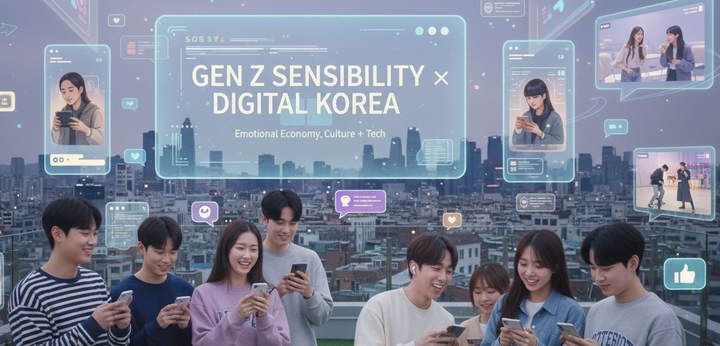
For both Korean and European Gen Z,
this societal dialogue will shape the major questions of their era:
AI ethics, sustainable growth, and the future of work.
Dialogue Is the Infrastructure of the Future
Korea and Europe do not need to become similar to collaborate deeply.
They need only understand one another’s tempo, philosophy, and social priorities.
And this understanding emerges through conversation — sustained, structured, and translated.
Dialogue lasts longer than technology.
Dialogue is stronger than systems.
Dialogue is the infrastructure on which societies build their futures.
When individuals connect through culture, when institutions coordinate across differences, and when societies articulate their values across borders, a new intellectual ecosystem emerges.
Korea and Europe now stand at such a threshold. Their young generations are ready not only to learn from each other, but to co-design the future.
Dialogue is how that future begins.
Dawn Chang, PhD · Editor-in-Chief, K-Welle · editor@k-welle.com