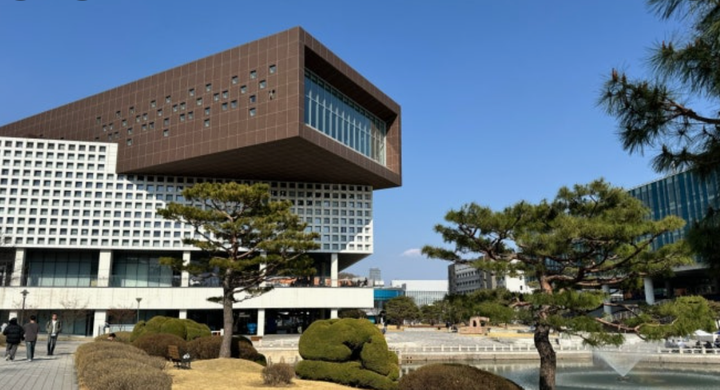
How Korea's Gen Z Reshaping the AI Workforce
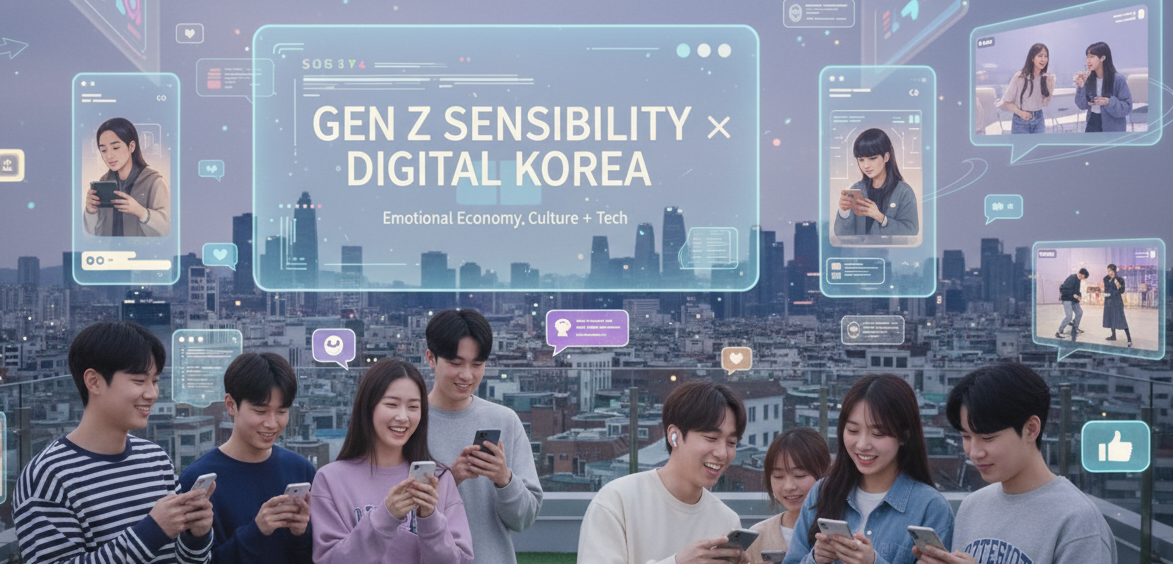
The Real Shape of Korea’s “Emotional Economy”:
Gen Z in Motion Korea’s Gen Z are not just consumers. They are market-makers who blend tech, culture, fashion, food, and content to create new demand. They are less “K-content fans” and more creators of experiences and stories—and their choices influence both industry trends and corporate strategy. This experimental domestic demand is a key driver behind the rapid expansion of Korea’s startup ecosystem.
Against this backdrop of structural experimentation, no group is more central to Korea’s next economic model than its Gen Z.
Their role extends far beyond consumption. Korea’s Gen Z operate as market-makers, blending technology, culture, fashion, food, mobility, and digital content into entirely new forms of demand. They are less the passive “fans” of K-content and far more the co-creators of experiences, narratives, and aesthetic value.
Their preferences shift quickly, their feedback loops are immediate, and their expectations around design, emotion, and usability force companies to iterate at unprecedented speed.
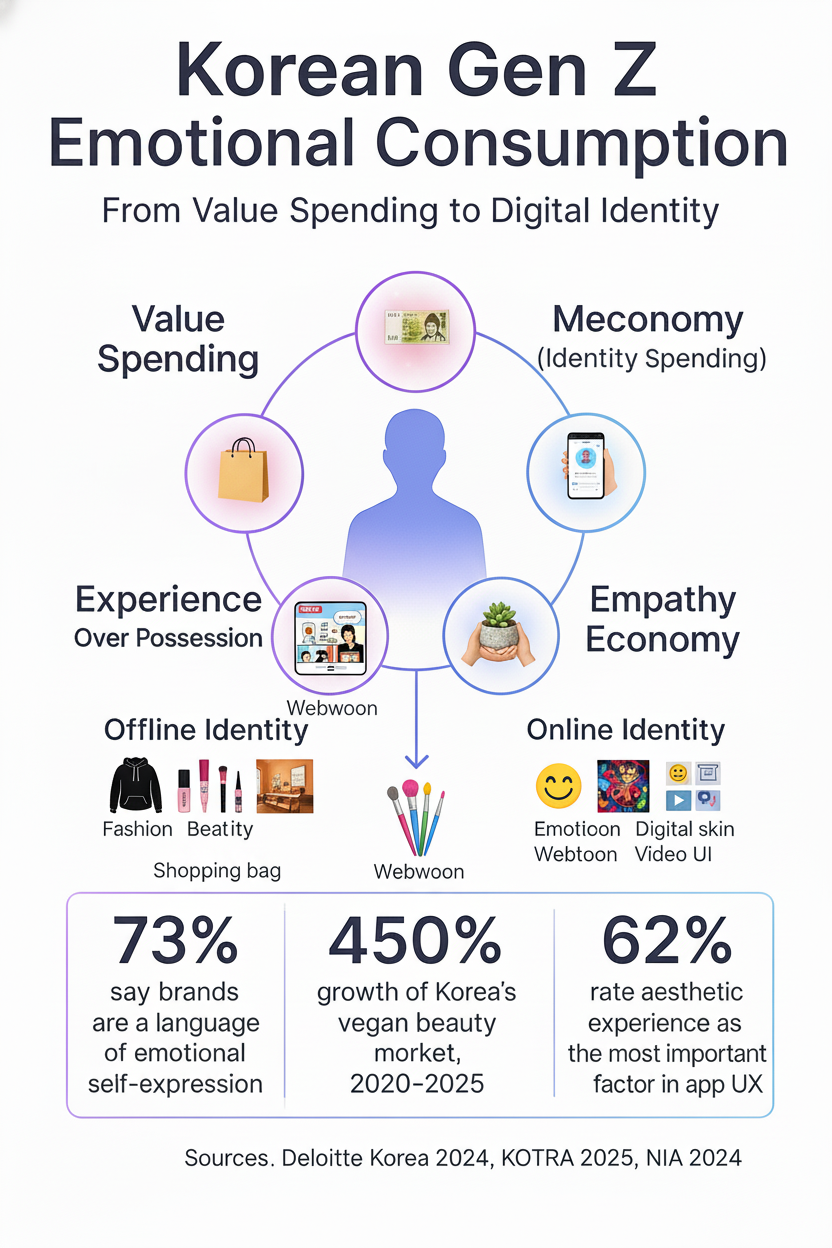
As a result, Gen Z behavior doesn’t simply respond to industry trends—it generates them.
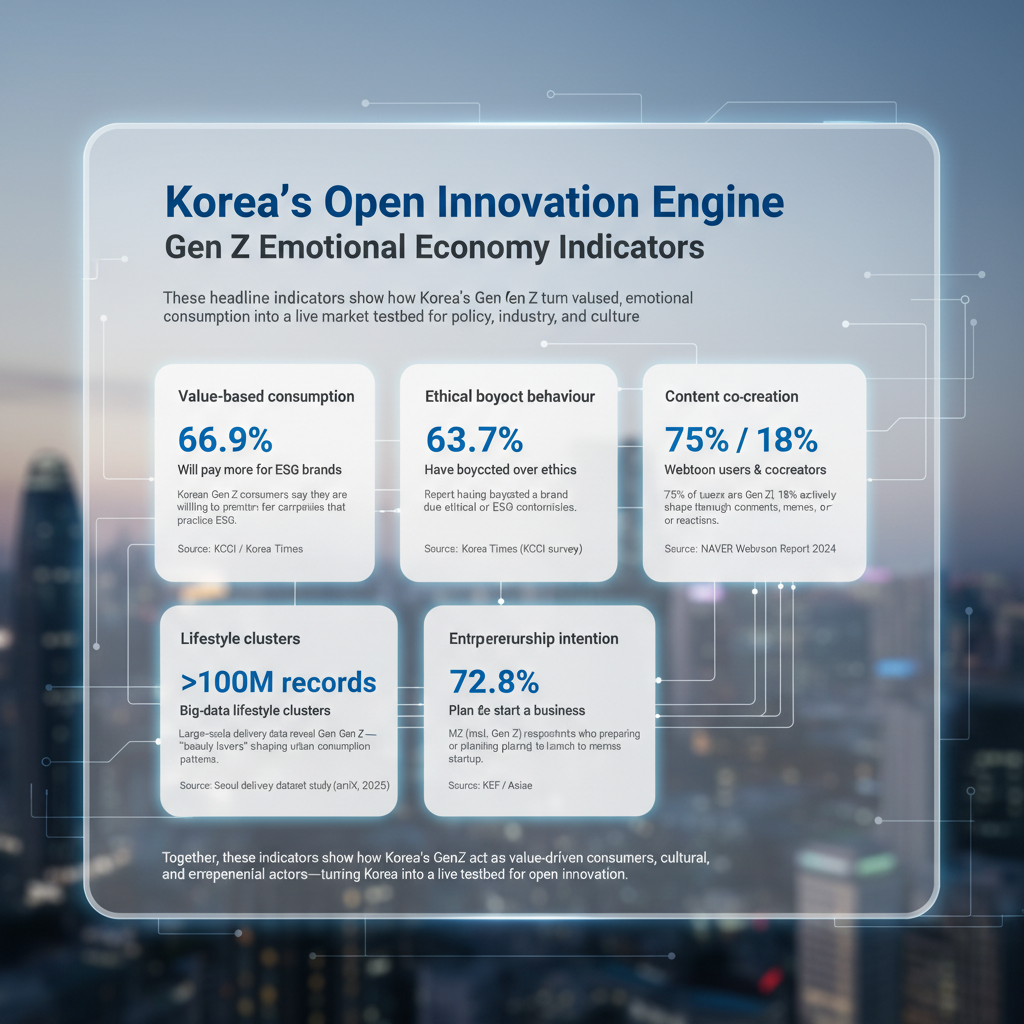
This experimental and emotionally driven domestic demand has become a structural engine behind the rapid expansion of Korea’s startup ecosystem.
Startups do not innovate in a vacuum; they innovate because a generation of consumers is willing to test, adopt, critique, and abandon products at scale, creating a dynamic environment where trial-and-error is not just tolerated but rewarded.
In other words, Gen Z provides the “live market conditions” that allow Korea’s policy and industrial experiments to materialize in real time.
Korea as an Open Platform for Gen Z
Unusually by global standards, Korea’s industry–government–university triangle connects field trials → regulatory sandboxes → startup formation → industrial rollout with exceptional speed.
In sectors such as AI healthcare, smart mobility, and clean energy, young founders are already leading projects, turning learning-by-doing into tangible results.
For Gen Z, this structure is not theoretical; it is a live system that allows ideas to move from prototype to real-world deployment faster than in most advanced economies.
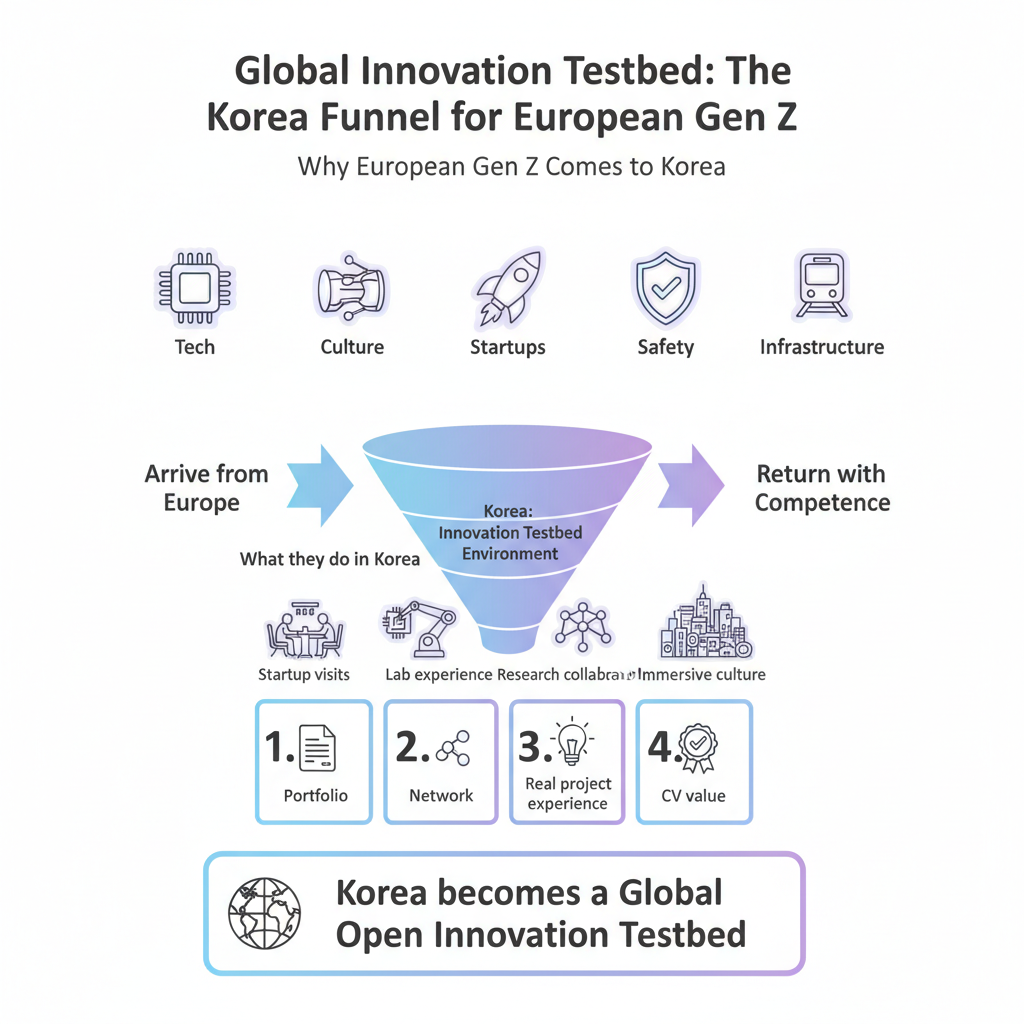
European (incl. German) Gen Z: Testing the Future in Korea
Korea is no longer only a travel destination. Students and young professionals from Germany and across Europe are increasingly on the ground—experiencing environments where technology, industry, and culture converge, and using that exposure to advance their skills, projects, and future careers.
Startup tours, research collaborations, and hands-on industry placements function not as cultural visits but as career assets.
Inside Korea, Korean Gen Z create new markets; from outside, European youth plug into these dynamics and help amplify them—turning Korea into a genuinely open, globally accessible innovation testbed.
Korea is where policy, industry, and culture converge at speed—making it one of the most compelling places today for Europe’s students and young innovators to learn, build, and experiment.
References — How Korea's Gen Z Reshaping the AI Workforce
Curated sources
“Korea's Open Innovation Engine” · Click to expand / collapse
Below is a curated list of Korean and international sources on Gen Z consumption, value-based spending, and emotional economy.
-
김예은, 김승인.
“Z세대의 소비 특성이 이커머스 산업에 미치는 영향.”
산업진흥연구 (Industry Promotion Research), Vol. 9, No. 3, 2024, pp. 129–138.
-
이상권, 정인희, 조윤진.
“MZ세대의 윤리적 소비성향이 사회적 기업의 패션 상품 구매의도에 미치는 영향.”
Human Ecology Research / Family and Environment Research, Vol. 60, No. 3, 2022, pp. 443–458.
-
김수연, 설진선, 이용주.
“정말 한국의 Z세대 소비자는 일반제품보다 친환경제품에 대한 구매의도가 더 높을까? 가격에 따른 소비가치인식을 중심으로.”
한국언론학보, Vol. 68, No. 2, 2024, pp. 212–254.
-
강유림, 김문영.
“MZ세대의 자기애 성향이 럭셔리 패션상품의 보상소비에 미치는 영향.”
한국의류산업학회지 (Korean Fashion & Textile Research Journal), Vol. 26, No. 4, 2024, pp. 380–392.
-
Doh, Yerin; Bae, Joonhyung.
“Immersive Fantasy Based on Digital Nostalgia: Environmental Narratives for the Korean Millennials and Gen Z.”
Working paper / archive, arXiv, 2025.
-
Lee, Minjin; Kim, Hokyun; Jun, Bogang; Park, Jaehyuk.
“We Are What We Buy: Extracting Urban Lifestyles Using Large-Scale Delivery Records.”
arXiv, 2025.
-
K-Social Value.
“Korean Youth and Value-Based Consumption: The Quiet Power of Social Innovation.” 2025.
SEO Consumer Insight Report. “2025년 MZ세대 소비 트렌드 분석.” 2025.
-
한국산학기술학회 논문지.
“Z세대 대학생의 기부 경험 및 기부의도에 관한 연구.”
한국산학기술학회논문지, Vol. 24, No. 4, 2023.
Dawn Chang, PhD · Editor-in-Chief, K-Welle · editor@k-welle.com