Korean Fluency Does Not Pull You — Your Code Does

In the previous chapters we examined why Korea appears as a candidate destination, how its system works, how people enter it, and what the real cost structure looks like.
The final question is simple.
Should you go?
Language Does Not Pull You — Your Work Does
Curiosity alone rarely opens doors in Korea.
What opens doors are signals:
capability, portfolio, and deployable output.
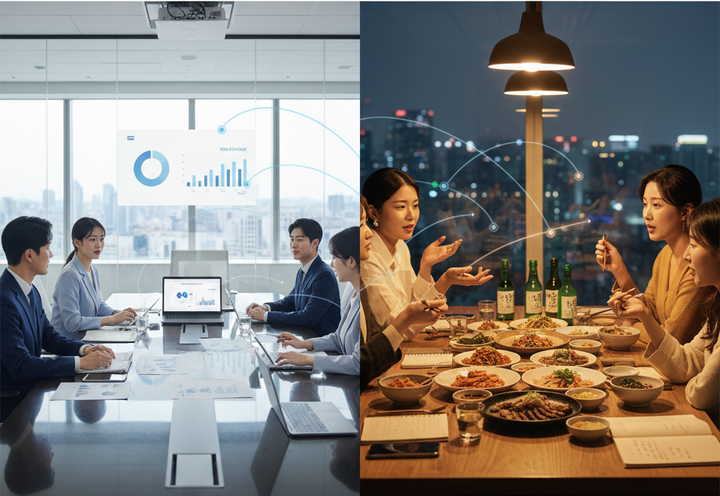
Korea therefore functions less like a destination and more like a structure.
Living in Korea itself is not the value.
The value comes from the structure you choose.
Which platform you enter.
Which density you operate in.
How long you stay.
What output you produce.
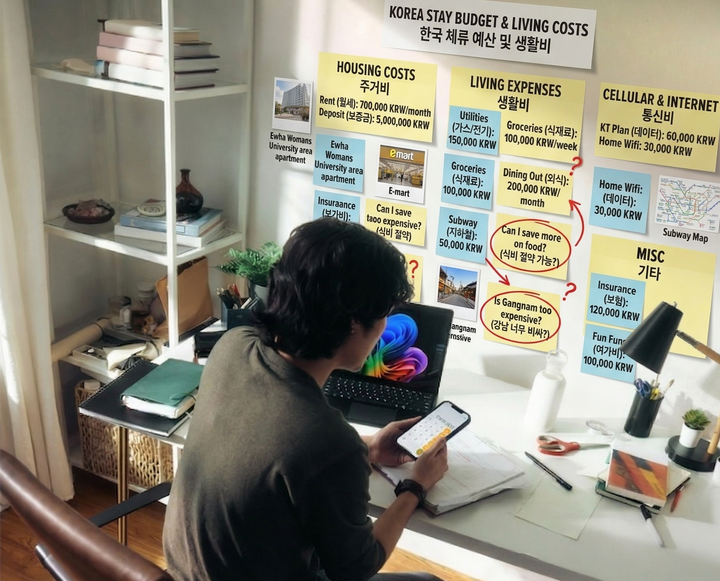
Without structure, a stay often becomes costly exploration.
With structure, the same environment can become a career accelerator.The Right Question
The wrong question is simple. “Is Korea good?”
A better question is this:
“From my current position and goals, is Korea the right structure?”
To answer that question, it helps to run a simple diagnostic model.
The GPS Scorecard
design, visual work, writing
papers, research findings
code, apps, initiatives
letters, endorsements
TOPIK, speaking fluency
savings, living budget
experience, portfolio
industry contacts, mentors
Already has an offer or project
Building future differentiation
Expanding skills and options
Interest without structure
University · Company · Research Lab · Program
Seoul (highest density) · Capital Region · Regional Cities
Strategy and Proof
Once Goal, Position, and Strategy are defined, one final question remains.
What will remain after the stay?
A Practical Example
Consider a student working in design or digital content production.
If the student enters Korea only through language study or informal exploration, the experience may remain personally meaningful but professionally ambiguous.
However, the structure changes when the student enters through a practice-linked program or collaborative project environment.
Projects produce deliverables.
Deliverables become portfolio pieces.
Portfolio pieces become signals.
Within a year, the individual may leave Korea with several completed projects developed inside Korean teams or institutions.
At that point, language no longer functions only as a barrier.
It becomes an amplifier.
Communication becomes easier because the individual is already producing visible value.
The Core Reality
Korea can be an expensive environment for unstructured stays.
But it can be extremely powerful for well-designed ones.
The difference rarely comes from the city, the visa, or even the duration.
It comes from clarity of structure.
Final Reflection
Before booking a flight, three questions should be clear.
What proof will exist after the stay?
Which platform will produce that proof?
And who will recognize that signal later?
If those answers exist, Korea can become a powerful environment.
If they do not, the stay often remains only an experience.
Dawn Chang, PhD · Editor-in-Chief, K-Welle · editor@k-welle.com