

Strategy for Staying in Korea
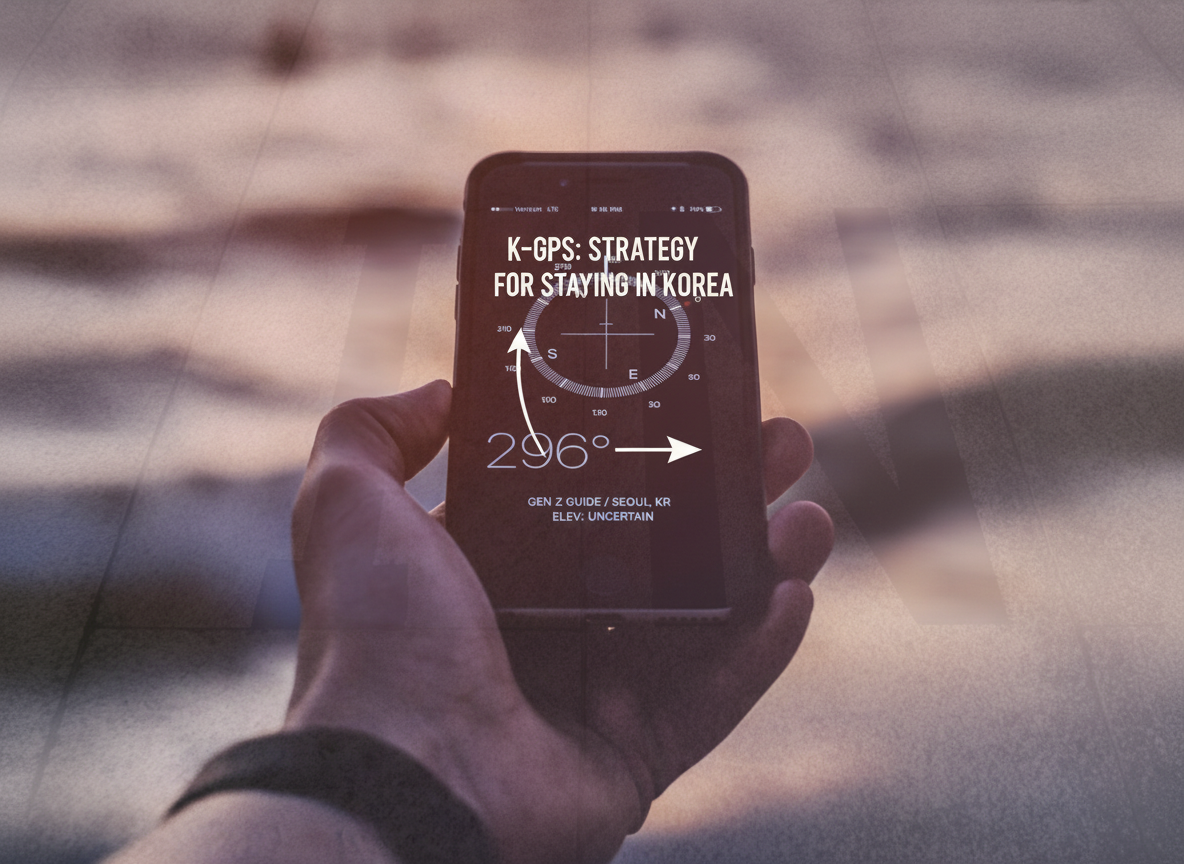
Before deciding to stay in Korea, many Gen Z visitors imagine a simple navigation system — a K-GPS.
It focuses on three coordinates: Purpose, Cost structure, Career expansion
As these coordinates begin to align, the experience often becomes easier to sustain.
This framework offers one perspective for navigating a stay in Korea.The Typical Korea Stay Timeline
Many international visitors experience a similar progression during their stay.
| International Visitor Journey Timeline | |
|---|---|
|
Month 1 Exploration |
|
|
Month 3 Reality Check |
|
|
Month 6 Strategic Decision |
Choosing one of three paths:
|
|
Month 12 Outcome |
|
What determines the difference is rarely time.
It is strategy.
Core Failure Structures
Most unsuccessful stays do not fail because of lack of effort.
They fail because the strategic coordinates were never defined.
Below are the most common structural mistakes.
| The Problem (Failure) | The Strategy (Adjustment) |
|---|---|
| 1. Experience Trap: "Living for a year but unable to explain it" | |
|
Failure
Rich exploration but no visible output
No portfolio or CV assets after 12 months
Result: Memories remain, assets do not.
|
Adjustment
Experience → Project: Mapping ecosystems, documenting scenes, or publishing field notes.
Result: Experience becomes portfolio material.
|
| 2. Seoul Overexposure: "Opportunity exists, but costs grow faster" | |
|
Failure
High cost of living (€2,000+/month)
High energy consumption in a crowded hub
Result: Financial and mental burnout.
|
Adjustment
Seoul as a Network Hub: Use lower-cost base cities (Busan, Suwon, Daegu).
Commute to Seoul specifically for networking.
Result: Lower cost with continued access.
|
| 3. Regional Misalignment: "Affordable, but nothing happens" | |
|
Failure
Moving to small cities solely for low rent
Isolation due to lack of professional networks
Result: Stagnation in a quiet environment.
|
Adjustment
Focus Residency: Use the quiet for deep work (writing, research, production).
Result: Productive output + Cost efficiency.
|
| 4. Housing Lock-in: "One apartment fixes the entire strategy" | |
|
Failure
Committing to large deposits/long contracts early
Lost mobility for better opportunities elsewhere
Result: Physical and financial inflexibility.
|
Adjustment
Flexible Housing Strategy: Prioritize short-term rentals/shared housing for the first 6 months.
Result: Strategic mobility remains possible.
|
| 5. Administrative Friction: "Missing the first 2 weeks costs 2 months" | |
|
Failure
Delayed registration leading to no banking/digital auth
Inefficiency costs: €200–€800 extra per month
Result: Locked out of the local ecosystem.
|
Adjustment
Arrival Sprint: Complete ID, bank, and phone setup within the first 14 days.
Result: Full systemic participation.
|
| 6. Income Illusion: "I will find opportunities after arriving" | |
|
Failure
Arriving without a secured financial runway
Mounting pressure as savings dwindle
Result: Desperate, non-strategic choices.
|
Adjustment
Runway Strategy: Secure remote income or sufficient savings before arrival.
Result: Reduced pressure, open choices.
|
Strategic Risks
Patterns that can compromise your stay strategy
Is Korea Too Complex?
No — Korea’s Default Is Already High
Many European Gen Z visitors initially believe Korea is overly complicated.
However, the complexity often reflects high system integration, not dysfunction.
It is a high-density infrastructure environment.
The Real Problem
The challenge is not infrastructure, but how access is structured.
In practice, the experience of living in Korea often develops through connections.
Administrative systems, digital platforms, and social networks gradually shape how daily life functions.
As visitors connect to these layers, the stay often becomes easier to navigate.
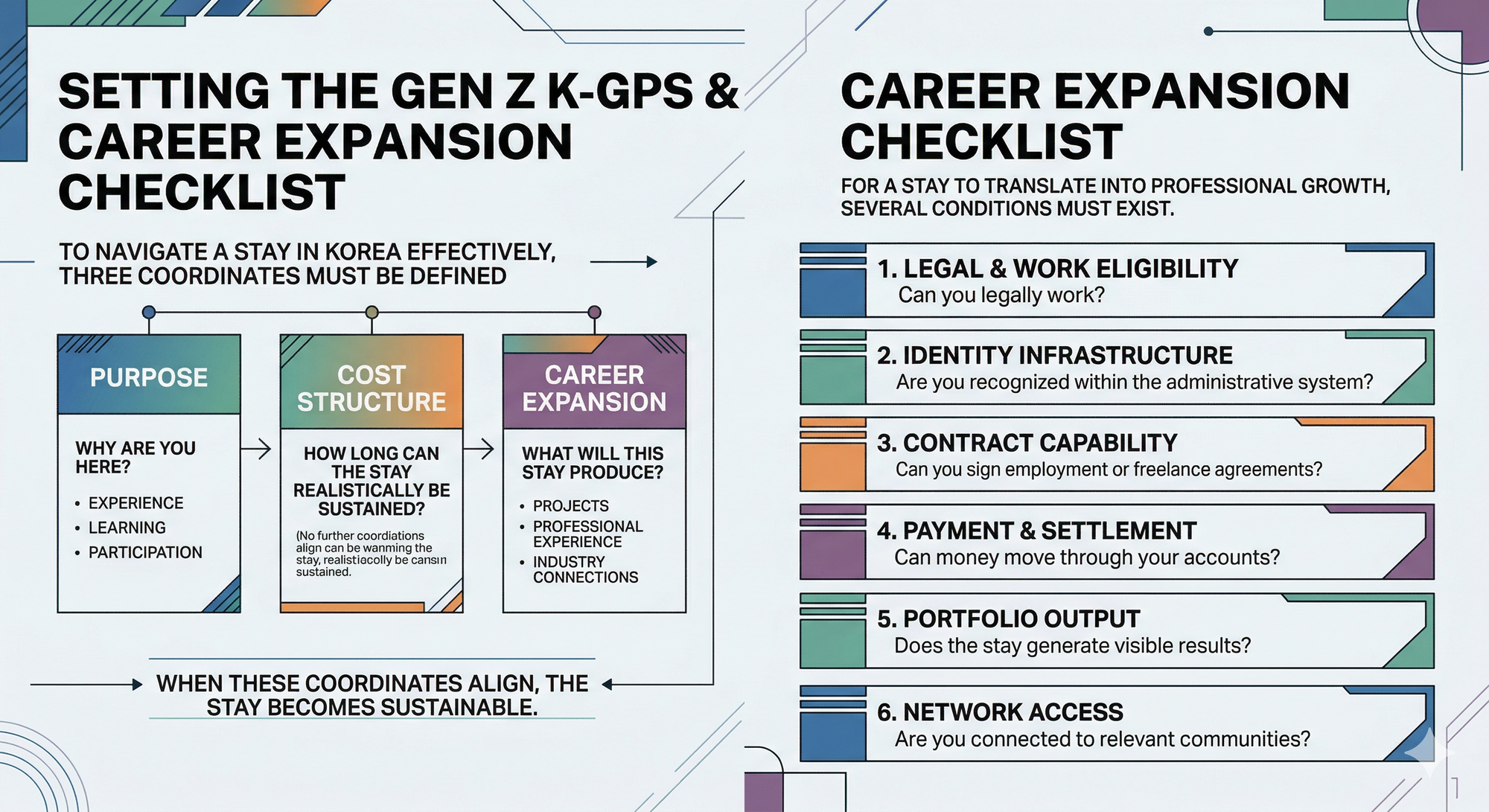
Korea is not a difficult country to live in.
It is a highly structured and connected system.
Success does not depend on how long someone stays.
It depends on how quickly they connect to the system and align their K-GPS.
Dawn Chang, PhD · Editor-in-Chief, K-Welle · editor@k-welle.com