Korea’s Relationship Codes

Social Capital and Work Rituals in a Changing Society
From social capital to work rituals, the informal codes shaping trust, work, and opportunity in South Korea
South Korea is often seen as a hyper-modern society driven by technology, speed, and global culture. But beneath that image lies another reality: relationships still shape how trust is built, how organizations work, and how opportunities are distributed.
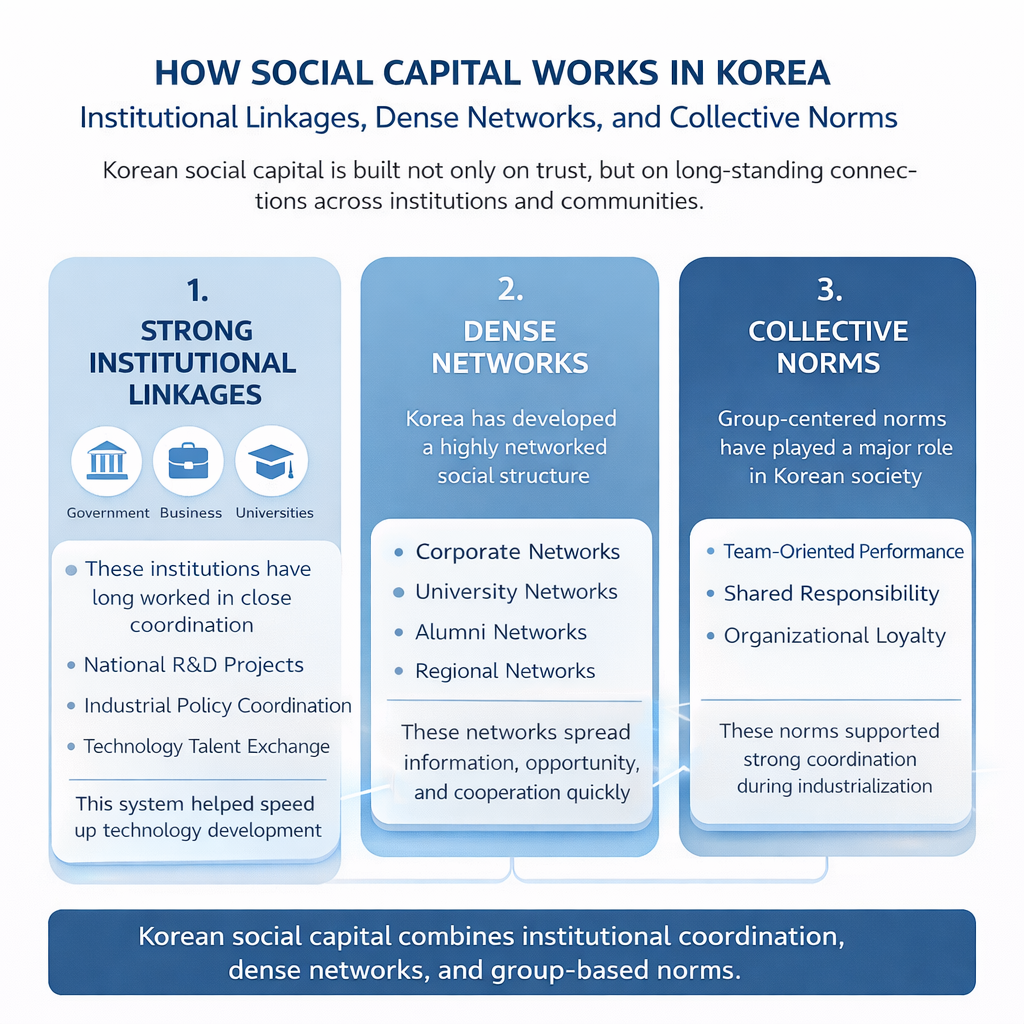
At the center of this system is social capital—the trust, networks, and shared norms that connect people and institutions. In Korea, strong institutional linkages, dense networks, and collective norms helped organizations cooperate quickly and move with unusual speed.
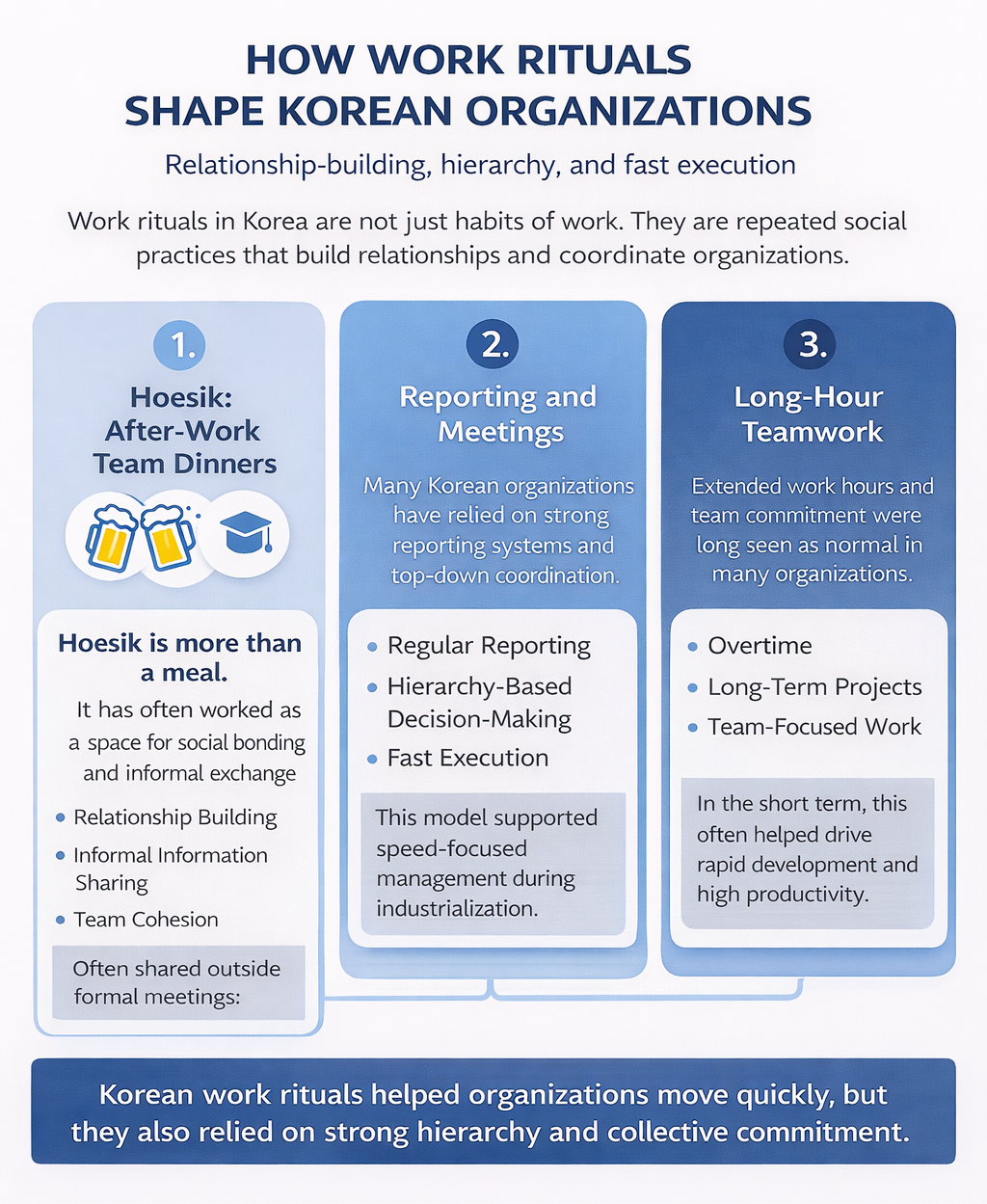
These patterns are reflected in work rituals. Practices such as hoesik (after-work team dinners), reporting culture, hierarchy, and long-hour teamwork have long helped Korean organizations build cohesion and execute quickly.
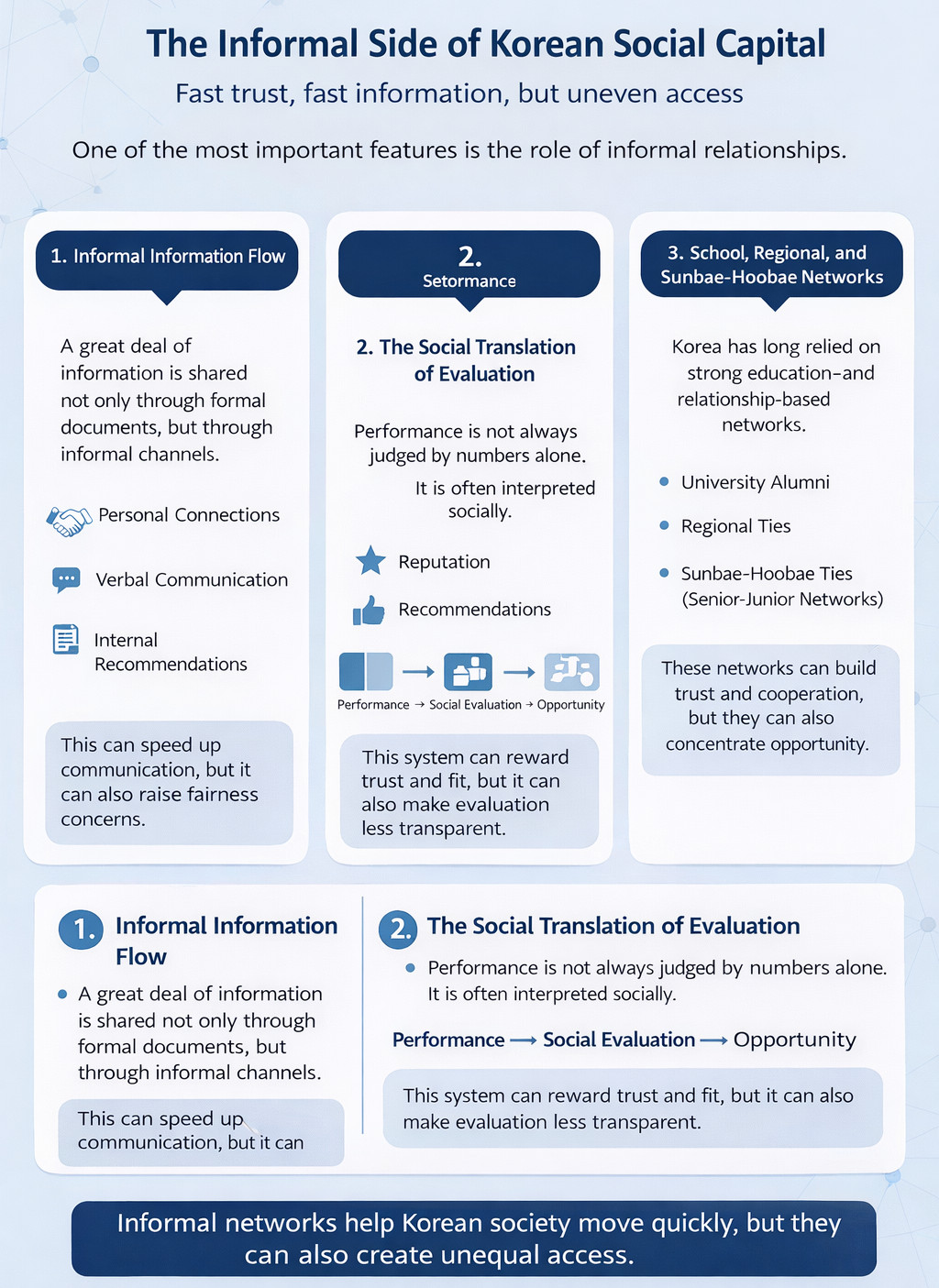
But this system has also relied on informal channels. Information often travels through personal connections, evaluation is shaped by reputation and recommendations, and school or regional ties can influence access to trust and opportunity. What makes coordination faster can also make access less equal.
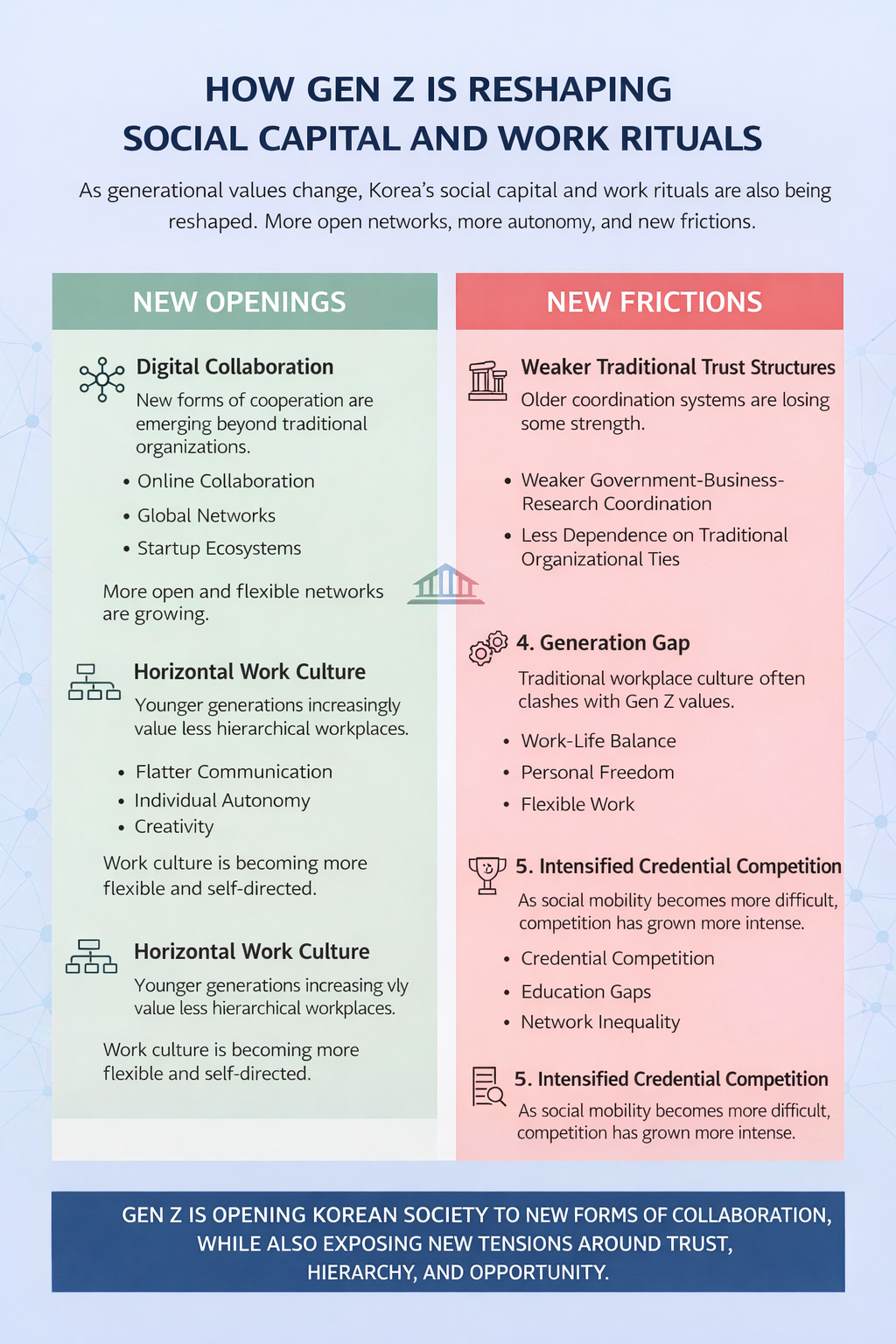
Now, younger generations are reshaping these rules. Digital collaboration, flatter communication, and greater autonomy are opening Korean society to more flexible forms of connection. At the same time, traditional trust structures are weakening, generational tensions are rising, and competition over credentials remains intense.
Korea still runs on relationships—but the meaning of those relationships is changing.
Korea’s Relationship Codes, Explained
Four key ideas that help readers understand how trust, work, and informal networks operate in Korea.
Hoesik
A shared meal after work where coworkers build rapport, exchange informal information, and reinforce team cohesion.
Sunbae-Hoobae
A relationship structure shaped by age, seniority, or institutional experience that often affects guidance, trust, and opportunity.
Social Capital
The social connections that make cooperation, coordination, and collective action possible across people, groups, and institutions.
Work Rituals
Everyday routines—such as reporting, meetings, hierarchy, and bonding practices—that shape relationships and organizational coordination.
Dawn Chang, PhD · Editor-in-Chief, K-Welle · editor@k-welle.com