Korea Entry, but Make It Korea

A Decision Map for Gen Z:
Level → Entry Choices → Cost & Responsibility Ledger → Route Code
Korea’s appeal isn’t a vibe, and it isn’t “a month abroad” with better aesthetics. It is an accelerated opportunity structure. Entry routes are organized around platforms—universities, companies, labs, programs—and outcomes change sharply with urban density (Seoul/metro/regional). In that sense, Korea is less a place you “try and see,” and more a place you calculate before you enter.
But the trade-off is just as structural. Korea is not an automatic premium. The moment you gain access, you also inherit costs, responsibilities, and energy drain. This piece does not recommend Korea. It gives you a way to put “what you can gain” and “what you will pay” on the same ledger—then decide.
[Level Diagnostic] Identify your target Level in 3 minutes
Pick the single statement that is closest to you.
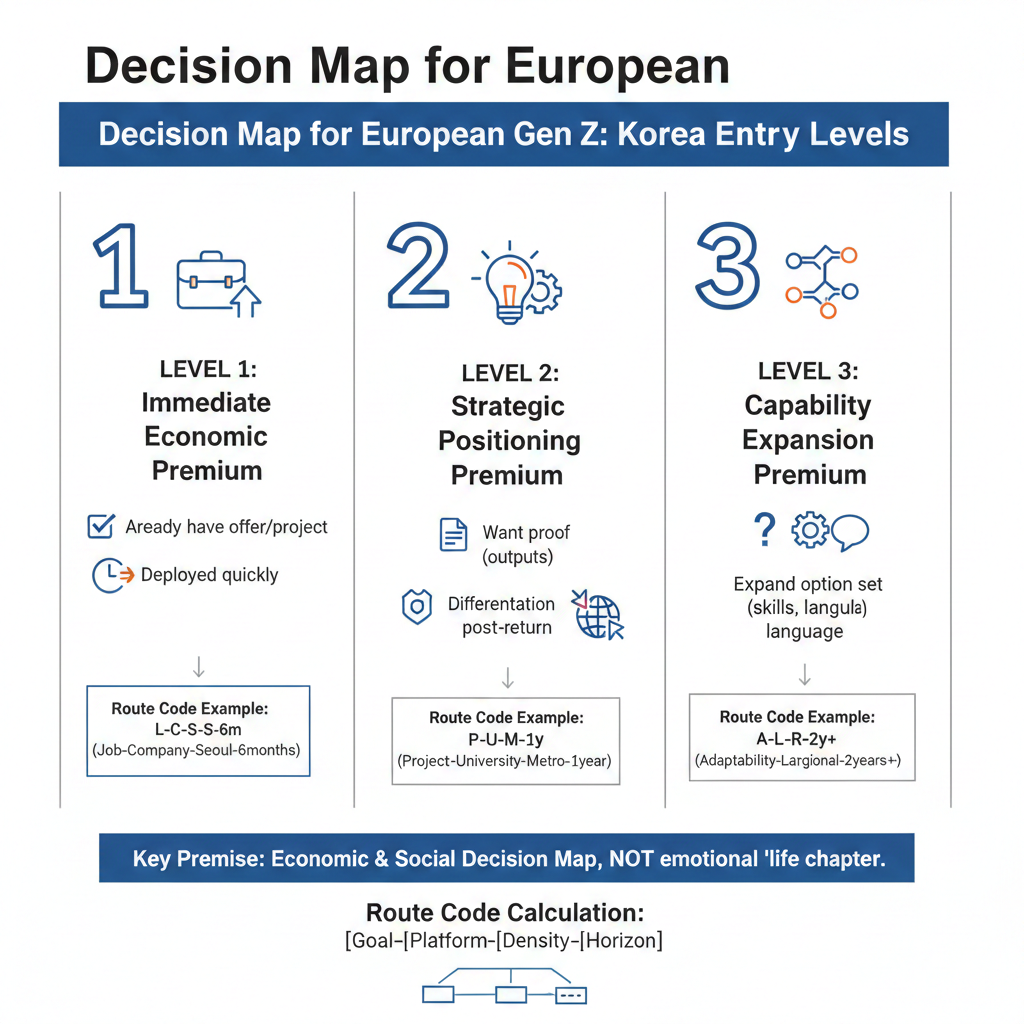
Key premise: a Korea experience is not primarily an emotional "life chapter.” It is an economic and social decision map. Losses usually come not from Korea itself, but from a mismatch between your current Level and your expected payout.
[Initial Choices] In Korea, these three variables act as levers
Once you choose a Level, you choose your entry geometry. In Korea, three levers matter disproportionately:
- Platform: university / company / lab / program
- Density: Seoul / metro / regional
- Horizon: 6m / 1y / 2y+ / 4y+
This is not lifestyle preference. In Korea, platform and density tend to determine both access (what you can realistically do) and switching costs (how hard it becomes to change direction).
[Cost & Responsibility Ledger] What you will pay in Korea’s “OS”
Now run the real simulation: not just money, but responsibility and energy costs. What Gen Z often underestimates is the early-stage participation cost inside Korea’s system.
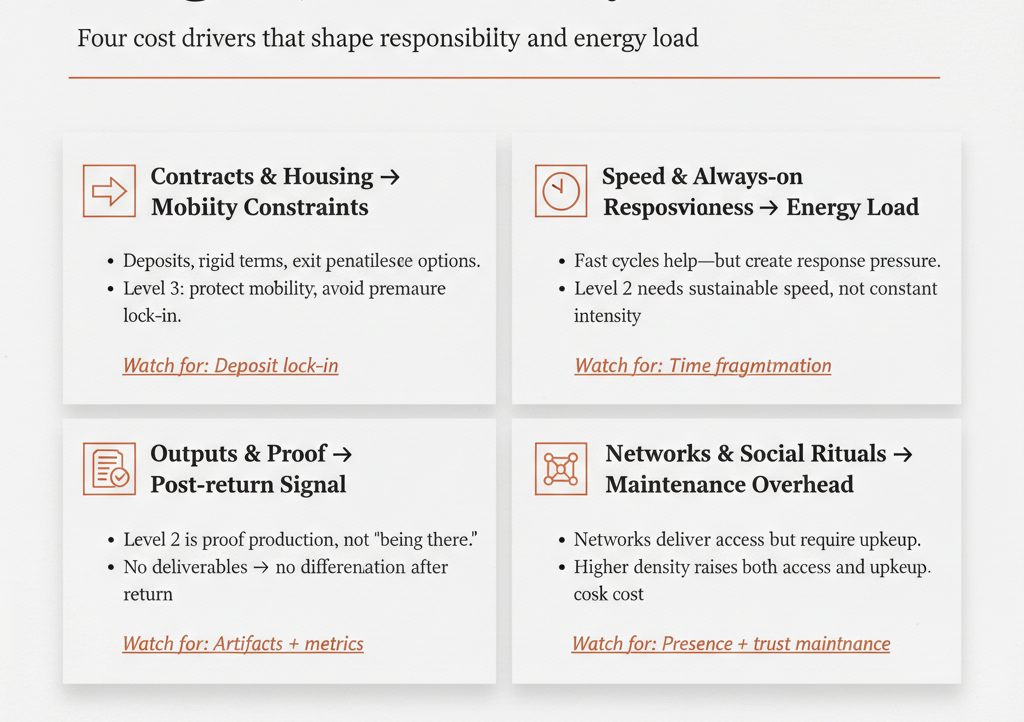
- Contracts & housing → mobility constraints
Upfront fixed costs (deposits, contract rigidity, exit penalties) reduce optionality. For Level 3 in particular, mobility is an asset—and contracts can sell that asset too early. - Speed & always-on responsiveness → energy and psychological load
Fast feedback can create opportunities. It can also fragment time and drain energy through “always-on” expectations. If you aim for Level 2, the key is not intensity—it is sustainable speed. - Outputs & proof → post-return differentiation
For Level 2, staying is not the product. Proof is. Without deliverables (projects, metrics, artifacts, recommendations), “strategic positioning” collapses into “just being there.” - Networks & social rituals → relationship maintenance overhead
Networks can open doors—but they also require operating expenditure: time, responsiveness, presence, trust maintenance. Higher density often increases both access and maintenance cost.
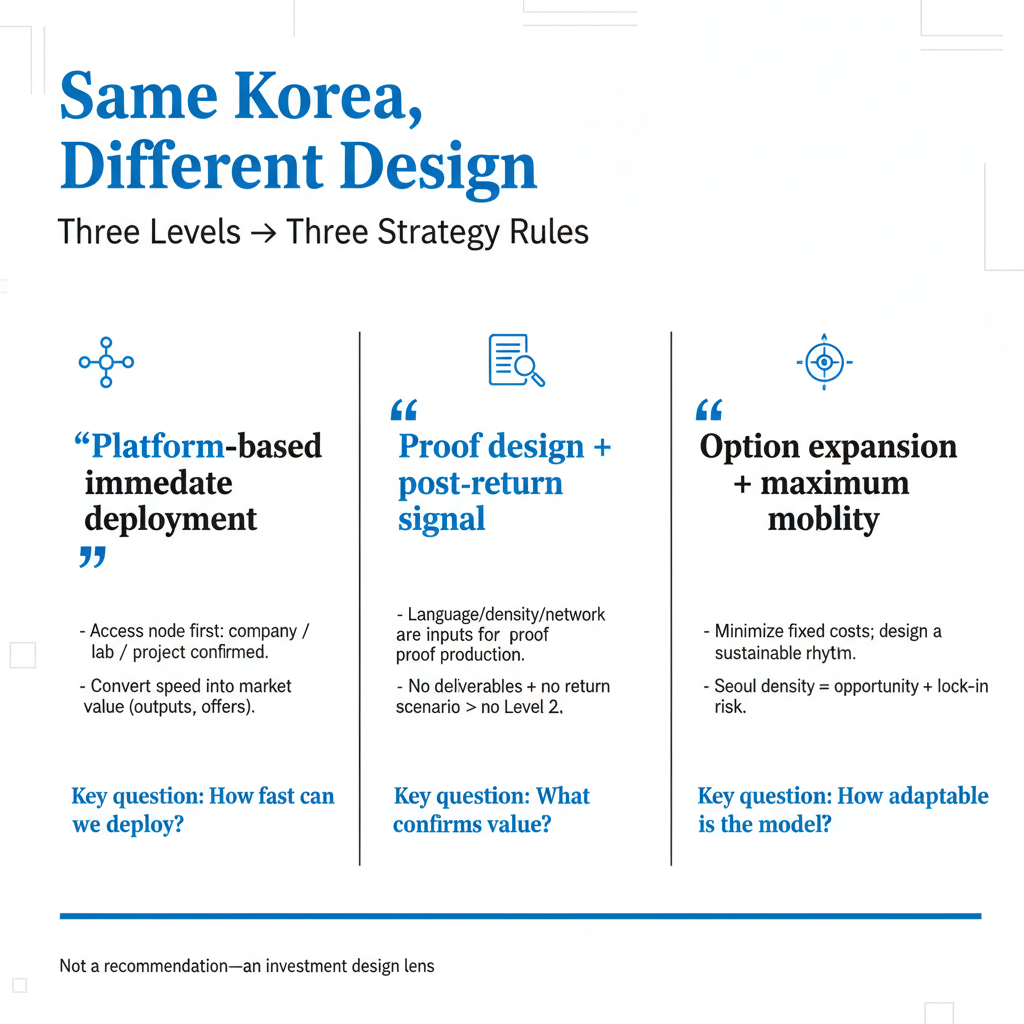
[Level-specific Strategy Points]
[Route Code Calculation] Compress your choice into one line
At the end, your entry strategy should be describable in a single line:
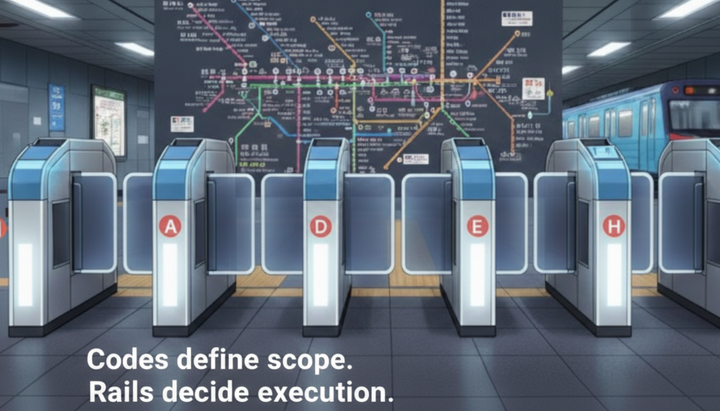
[Goal]-[Platform]-[Density]-[Horizon]
Examples:
- A-L-M-1y: language-based entry + metro + 1 year (Level 3 → 2 bridge)
- N-C-R-1y: industry cluster + regional hub + 1 year (cost-efficient, proof required)
- A-R-S-2y+: lab-based track + Seoul + 2 years+ (strong signal, strong lock-in)
Route Code is not a recommendation. It is a summary of your investment structure. The next volumes unpack the hidden costs that each code tends to generate.
[Strategy Map]
Korea does not deliver an automatic premium. It is a market where the shape of value depends on conditions. Your first decision is your target Level. Your second is your entry geometry—platform, density, contract exposure, and speed tax—before you compute your Route Code.
Final question: In which structure can you actually grow?
Dawn Chang, PhD · Editor-in-Chief, K-Welle · editor@k-welle.com

![How Cost & Accessibility Shape City Choice for Gen Z [Vol 2.]](/content/images/size/w720/2026/02/nano-banana-2026-02-03T10-53-01-1.png)